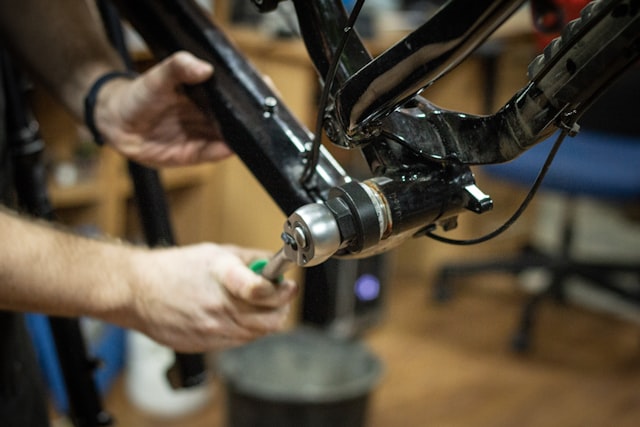
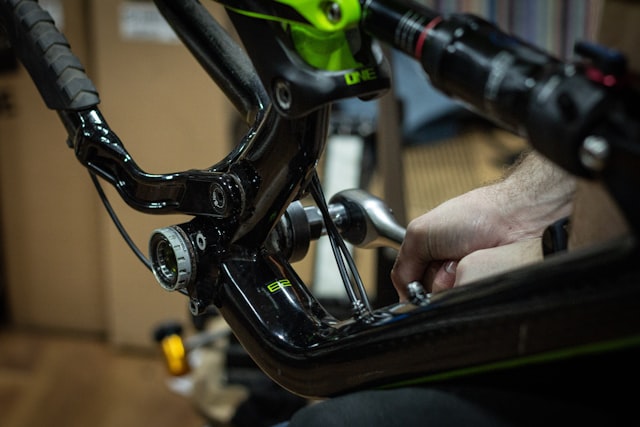
Cranks, chainrings and bottom brackets — including PAS-compatible options.
Cranks, chainrings and bottom brackets take a beating on e-bikes. Chainrings wear to a shark-fin shape, crank arms get stripped where the pedal threads in, and bottom bracket bearings develop play. On hub-drive bikes these are mostly standard bike parts with one wrinkle: the pedal-assist magnet ring sits on the crank spindle and has to clear the new parts. On mid-drive bikes, the crank and chainring attach to the motor and are usually motor-specific. The good news is that the wear parts are inexpensive and the tools (a crank puller and a bottom bracket tool) are cheap and reusable.
Start by identifying your crank interface. Square-taper spindles are the norm on hub-drive e-bikes and budget bikes; other standards (ISIS, Octalink, two-piece external-bearing cranks) appear on nicer bikes. Crank arm length (commonly 170 or 175mm) and chainring size and bolt circle (BCD) determine what chainrings fit. On a hub-drive bike with a single chainring, a narrow-wide ring helps keep the chain on, and a chainguard keeps pants clean.
Bottom brackets are sized by shell width (68 or 73mm on most bikes, wider on fat bikes) and thread standard, and square-taper units also by spindle length, which sets chainline and clearance for the pedal-assist ring. Replace like-for-like unless you understand the chainline implications. Confirm your interface, shell width and spindle length on your bike before ordering, and on mid-drives, buy parts made for your motor model. Crank length is also worth a thought: shorter cranks reduce pedal strikes on small-wheel and low-bottom-bracket e-bikes and are easier on knees for casual riders.