Chain LubricantFeatured
Finish Line Dry Teflon Bicycle Chain Lube
Best for: Dry, dusty riding · Riders who want a simple routine · Commuter and hub-motor e-bikes
View details & where to buy
Sold on Amazon
The small kit that keeps an e-bike reliable in Texas heat and dust — chain lube that survives torque, a stand rated for the weight, a torque wrench for axle nuts and stems, and a basic multimeter for charger and battery checks.
Staff picks
Best for: Dry, dusty riding · Riders who want a simple routine · Commuter and hub-motor e-bikes
Sold on Amazon
Best for: Anyone doing regular maintenance at home · Heavy e-bikes that are awkward to flip · Brake bleeds and drivetrain work
Sold on Amazon
Best for: Stem, bar and brake lever work · Rotor bolts · Rack and accessory bolts
Sold on Amazon
Best for: Checking battery and charger voltage · Continuity tests on cutoff switches and sensors · Riders who want a reliable meter for years
Sold on Amazon
32 products
Filter, then open a product for our notes and the Amazon listing.
Filter
Finish Line Dry is the default chain lube on the shelf at most shops, and for North Texas it is a sensible default: it goes on wet, sets up to a dry film that does not grab the grit blown around on our trails and roads, and it is cheap. E-bike drivetrains see more torque than regular bikes, especially with mid-drive motors, so they chew through lube faster. Expect to reapply every 100 miles or so, more in rain. Wipe the chain before and after applying; the extra lube on the outside only attracts dirt. It is not the longest-lasting lube, but it is forgiving and easy.
Best for: Dry, dusty riding · Riders who want a simple routine · Commuter and hub-motor e-bikes
Sold on Amazon
The Fluke 101 is the small, pocket-sized Fluke: DC and AC volts, resistance, continuity and capacitance, with no current measurement. For e-bike diagnosis that is almost everything you need — checking pack voltage at the discharge port, charger output at the plug, and continuity on brake cutoff wires. The reason to buy Fluke over a cheaper meter is trust: the readings are accurate and the meter is built to survive a drop. Limits: no current ranges, and it is not auto-ranging on every function. Measure only at exposed connectors and ports; never open a battery pack.
Best for: Checking battery and charger voltage · Continuity tests on cutoff switches and sensors · Riders who want a reliable meter for years
Sold on Amazon
The PCS-10.3 is the home mechanic stand most shops recommend, and the version that matters for e-bike owners: Park rates it for heavier bikes than most consumer stands, the clamp opens wide enough for fat seatposts, and the folding tripod base is stable with a 70-pound bike hanging off it. Clamp the seatpost, not the frame, especially on aluminum e-bike frames with internal batteries. The cam-action clamp and quick height adjustment make flats, brake work and drivetrain cleaning far easier than flipping the bike. It is expensive for a stand but it is the last one you buy.
Best for: Anyone doing regular maintenance at home · Heavy e-bikes that are awkward to flip · Brake bleeds and drivetrain work
Sold on Amazon
The TW-5.2 covers the torque range that matters for most e-bike cockpit and brake work: 2 to 14 Nm, which includes stem bolts, brake lever clamps, rotor bolts and rack bolts. It is a 3/8-inch drive click wrench with a ratcheting head and a clear scale. Over-tightening stems and display clamps on aluminum or carbon bars is a common home-mechanic mistake; a click wrench removes the guessing. Pair it with a set of hex and Torx bits. It does not reach the higher torques needed for crank bolts, cassette lockrings or axle nuts, which need a wrench that goes to 40 Nm and beyond.
Best for: Stem, bar and brake lever work · Rotor bolts · Rack and accessory bolts
Sold on Amazon
The AstroAI AM33D is the very cheap meter that shows up in every toolbox, and for the basic e-bike checks it is fine: DC volts at the battery port and charger plug, continuity on a brake sensor, resistance on a throttle. It is manual ranging with a small display and plastic build, and you should not trust the accuracy to the decimal. If all you want is to know whether a 48 V pack is reading near 54 V fully charged or down near 40 V, it answers that. Owners who end up doing more electrical work will upgrade, but as a first meter it costs less than a lunch.
Best for: First multimeter · Occasional voltage checks · Keeping a spare in the garage
Sold on Amazon
The Bikehand stand is the budget option that sells in huge numbers online, and it is genuinely decent: a height-adjustable pole, a rotating clamp with a quick-release, a tool tray and folding legs. The stated capacity is typically in the 55-pound range, which is right at the weight of many e-bikes once the battery is removed, so it is borderline for heavy fat-tire bikes and fine for lighter commuters. Clamp the seatpost and keep the bike balanced over the legs. It flexes more than Park or Feedback stands and the clamp jaws are softer. For occasional home maintenance on a lighter e-bike it is a fair value.
Best for: Budget home mechanics · Lighter e-bikes and folding bikes · Occasional maintenance
Sold on Amazon
The Engineer PA-09 is a Japanese-made crimper for very small open-barrel terminals — the kind inside JST-PH, JST-XH, Molex PicoBlade and similar connectors found in e-bike displays, sensor pigtails and some controller harnesses. It is not a ratcheting tool; you crimp the wire barrel and insulation barrel in two steps with different die positions, which takes practice but gives excellent crimps on pins too small for ratcheting crimpers. Hobbyists and repair techs swear by it. If you are rebuilding a damaged display or sensor plug rather than replacing the whole pigtail, this is the tool.
Best for: Rebuilding small display and sensor connectors · JST and Molex micro pins · Repair techs and hobbyists
Sold on Amazon
EZmtb's bleed kit is the widely sold generic kit with syringes, tubing, a bleed cup, a selection of fittings and, in most versions, a bottle of mineral oil. It covers the mineral-oil brakes that ship on most e-bikes — Tektro, Shimano and Magura — and the fittings list usually includes SRAM adapters too, but verify the exact kit contents against your brake model before buying. Bleeding is a methodical job, and a spongy lever on a heavy e-bike is a safety issue, so follow the brake maker's procedure. If you are unsure, this is a job to hand to a shop or get an E-Bike Assessment before riding with questionable brakes.
Best for: Mineral-oil brake bleeds at home · Tektro and Shimano brakes on e-bikes · Riders comfortable following a detailed procedure
Sold on Amazon
Feedback's Sport Mechanic is a lighter, quicker-folding tripod stand that many people prefer to Park's because it packs small and sets up in seconds. The clamp is a ratcheting design that grips a seatpost well and the tripod legs spread wide for stability. Its stated weight rating is lower than Park's PCS-10.3, so check it against a heavy fat-tire e-bike; for commuter and lighter e-bikes it is plenty. Remove the battery before clamping to lighten the load. It is a good choice for apartment dwellers and anyone who needs the stand to disappear between jobs.
Best for: Apartments and small garages · Lighter commuter e-bikes · Riders who travel with a stand
Sold on Amazon
A citrus degreaser is the right strength for a bike drivetrain: strong enough to cut old lube and road grit off a chain and cassette, mild enough that it will not damage seals or paint if you rinse it. Finish Line's citrus version is the standard; use it in a chain scrubber or brush it on, let it work for a minute, rinse with water and dry. Keep it off disc rotors and pads and away from the motor housing. After degreasing, the chain is bare metal, so re-lube before riding or it will rust and squeak. It is inexpensive and a bottle lasts a long time.
Best for: Chain and cassette cleaning · Prepping a chain for wax lube · Removing factory grease
Sold on Amazon
The Grunge Brush is a stiff three-sided brush that wraps around the chain so you scrub three faces at once, with a second brush on the handle for cassette cogs and derailleur pulleys. It is the manual alternative to a chain scrubber and gets into places the scrubber cannot — chainring teeth, pulley wheels, the cassette. Dip it in degreaser, scrub, rinse. On a mid-drive e-bike the chainring and pulleys collect more grime than on a regular bike, so a dedicated brush earns its place. It is cheap, simple and lasts years. Do not use it on rotors.
Best for: Cassette and chainring cleaning · Mid-drive drivetrains · Pairing with a chain scrubber
Sold on Amazon
Super Bike Wash is Finish Line's answer to the pink spray: a water-based cleaner you spray on, let dwell, brush and rinse. It is a bit less expensive than Muc-Off and works about as well on everyday grime; heavy mud takes more agitation. It is safe on paint, rubber and plastics, which matters on e-bikes with exposed wiring sleeves and plastic covers. As always, take the battery off and keep water away from the motor and display. If you wash weekly, the concentrate version is cheaper over time. It is a fine, no-drama cleaner.
Best for: Weekly maintenance washes · Budget-minded owners · Commuter grime
Sold on Amazon
Most e-bike signal wiring — display, throttle, brake sensors, PAS sensor — uses small crimped pins, and a ratcheting crimper is the difference between a connection that lasts and one that fails on a bumpy road. The SN-28B is the inexpensive ratcheting crimper that handles Dupont-style and JST-XH pins, which covers a lot of the small terminals you will meet when repairing or extending harnesses. It does not crimp the larger battery-side connectors like XT60 or Anderson, which are soldered or need a different die. Learn on scrap wire first; a correct crimp takes a little practice.
Best for: Repairing display, throttle and sensor pigtails · Extending harnesses · Small JST and Dupont terminals
Sold on Amazon
Most hub-motor e-bikes use round waterproof Julet or Higo connectors for the display, throttle, brake cutoffs and motor. When one pin is bent or corroded, you can often release and replace that pin instead of replacing the whole cable. A pin extractor kit is a set of thin hollow tubes and picks that depress the pin's retention tab so it slides out the back. Quality varies between sellers, and you need to match the pin size, so look for a kit that lists e-bike connector sizes. Always unplug the battery first and photograph the pin order before pulling anything.
Best for: Repairing bent or corroded Julet/Higo pins · Re-pinning a harness after a wire pulled out · Home mechanics comfortable with small connectors
Sold on Amazon
The HT118A is one of the popular auto-ranging budget meters, with a big backlit display, true-RMS AC, DC volts to 1000 V, current ranges, capacitance, temperature and a non-contact voltage detector. Auto-ranging makes it friendly for beginners: set it to DC volts and it figures out the range. Accuracy is good enough for e-bike battery and charger checks. Build quality is not Fluke, and the leads are average, but for occasional diagnostic use it is more than adequate. It is the meter to buy if you want features and a readable display without spending Fluke money.
Best for: Beginners who want auto-ranging · Battery and charger voltage checks · Readable display in a dim garage
Sold on Amazon
Klein's MM325 is a manual-ranging meter sold at every hardware store, with DC and AC volts, resistance, continuity, diode test and a 10 A current range. The current range is the difference from the Fluke 101: you can measure the standby draw from a light or accessory, which is occasionally useful. It is rugged, comes with decent leads and a stand, and reads e-bike pack voltages in the 36–52 V range without fuss. Manual ranging means you pick the range yourself, which is one more thing to learn but also one less thing to go wrong. A sensible choice for the home toolbox.
Best for: General home and e-bike electrical checks · Riders who want an amps range · Hardware-store convenience
Sold on Amazon
A bead jack solves the last-six-inches problem: the tire is almost on and the bead will not roll over the rim without a thumb-destroying fight. The Kool-Stop Tire Bead Jack hooks under the rim and levers the bead on with a long handle. It is especially useful on tight tubeless-ready and thick-casing fat tires. It stays in the garage; nobody carries it on the bike. Be careful not to pinch the tube with it, and work the rest of the bead into the rim channel first to give yourself slack. For anyone changing their own e-bike tires, it is a hand-saver.
Best for: Installing tight tires · Tubeless-ready commuter tires · Thick fat-tire casings
Sold on Amazon
Muc-Off's 8-in-1 kit bundles the pink Nano Tech cleaner with a set of brushes — soft wash brush, claw brush for the cassette, detailing brush, two-prong brush for the frame — plus a sponge and a tub to carry it all. It is the one-box answer for someone who has just bought an e-bike and wants to keep it looking new. The brushes are the right shapes for getting behind a hub motor and around rack mounts. It does not include a degreaser or chain lube, so add those. The tub doubles as the wash bucket. It is priced like a kit, not like a bargain brush set.
Best for: New e-bike owners setting up a wash kit · Gift buyers · Riders who want the right brushes for the job
Sold on Amazon
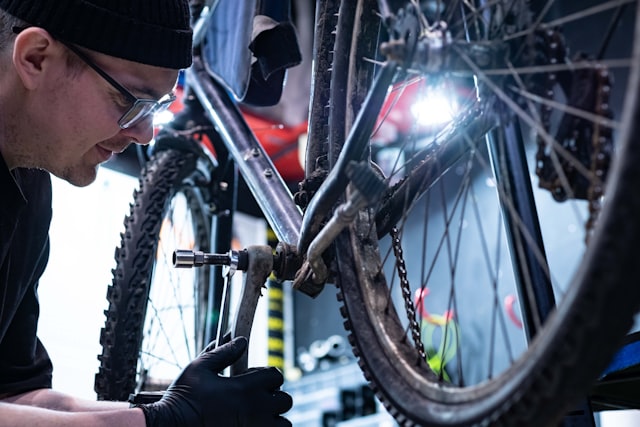
Muc-Off's Bio Drivetrain Cleaner is a spray degreaser that foams a little, clings to the chain and cassette, and cuts through heavy black buildup faster than a citrus degreaser in our experience. It is biodegradable and safe on the finishes you find on e-bikes, including anodized chainrings and plastic chain guards. Spray, let it dwell, brush, rinse, dry, re-lube. The spray format is convenient but makes overspray on rotors more likely, so mask the brakes or remove the wheel. Slightly pricier than bulk citrus degreaser, but you use less per cleaning.
Best for: Heavily gunked drivetrains · Mid-drive e-bikes with chainring buildup · Riders who prefer spray application
Sold on Amazon
Muc-Off's pink spray is the best-known bike wash, and it earns it: spray on a wet bike, wait a minute, agitate the dirty bits with a brush, rinse off. It lifts road grime and trail dust without stripping paint or anodizing. For e-bikes, the rule is the same as any wash: low-pressure water only, keep the hose away from the display, motor seals and battery contacts, and dry the bike before reconnecting the battery. It is biodegradable and comes in a refillable bottle. Pair it with a brush set and a degreaser for the drivetrain.
Best for: Regular bike washes · Muddy trail bikes · Owners who want a safe all-purpose cleaner
Sold on Amazon
The ATD-1.2 is a screwdriver-style torque tool that clicks at 4, 4.5, 5, 5.5 or 6 Nm and stores its bits in the handle. That narrow range is exactly where stems, seatpost clamps, display mounts and most accessory bolts live, so for many e-bike owners it is the only torque tool they use regularly. It is small enough to keep in a bag. It will not handle rotor bolts at 6.2 Nm with margin, and it will not touch cranks or axles. Think of it as the everyday tool and the TW-5.2 as the wider-range tool.
Best for: Stem and handlebar clamps · Seatpost clamps · Display and accessory mounts
Sold on Amazon
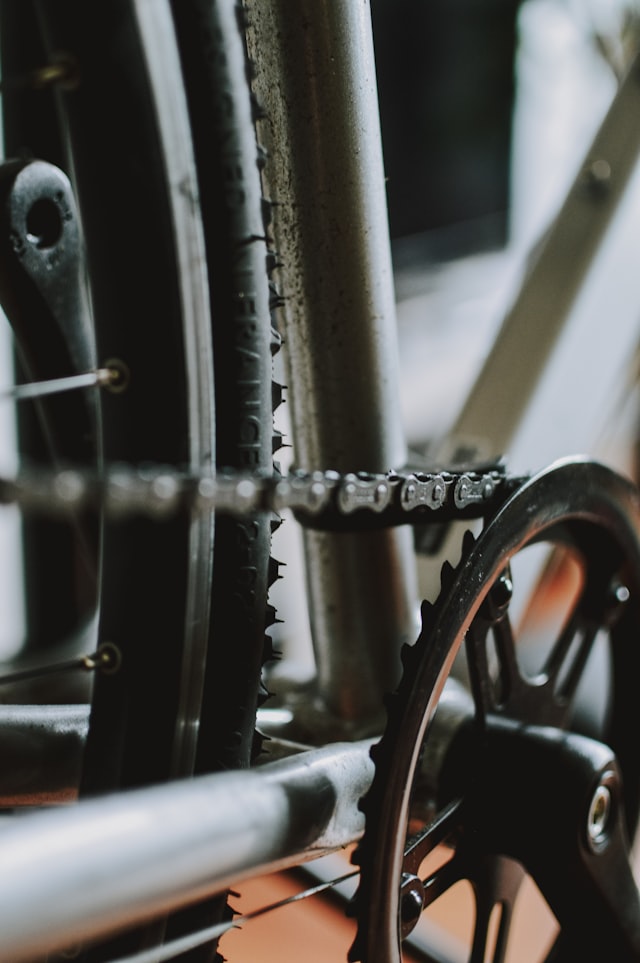
The Cyclone is a clamshell that snaps around the chain, holds a reservoir of degreaser and runs the chain through rotating brushes as you pedal backward. It turns a messy ten-minute job into a clean two-minute one and is the main reason e-bike owners who use it actually clean their chains. Fill it with citrus degreaser, clamp it on the lower chain run, backpedal thirty revolutions, rinse and dry. It works on e-bikes with the usual caveat that you keep the degreaser off rotors and do not flood the mid-drive motor area. The CM-5.3 includes a handle and a magnet to catch metal bits.
Best for: Regular chain cleaning · Mid-drive e-bikes that gunk up fast · Owners switching to wax lube
Sold on Amazon
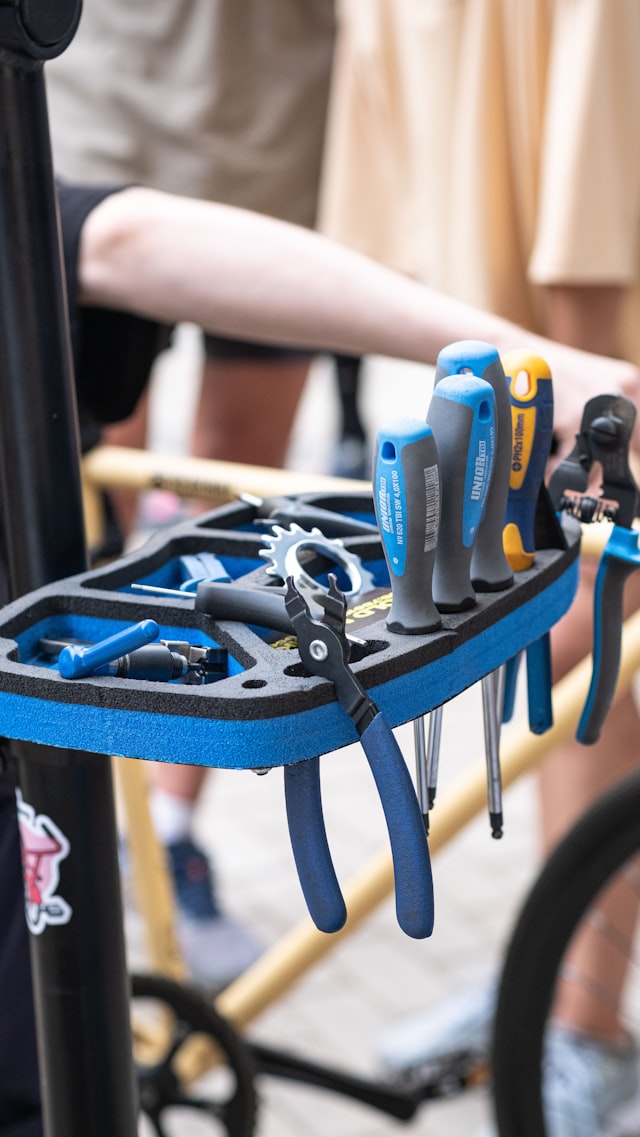
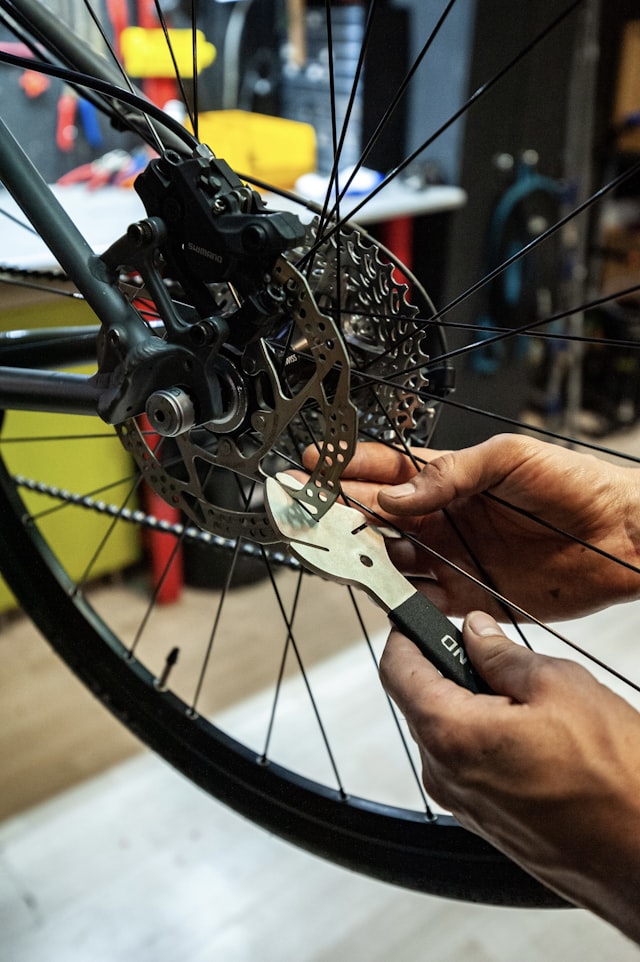
A rubbing disc brake is the most common e-bike annoyance, and a slightly bent rotor is the usual cause after the bike has been leaned on a rack or dropped. The DT-2 is a slotted steel fork that grips the rotor so you can bend it back a hair at a time while spinning the wheel and sighting through the caliper. It is a simple tool that replaces the adjustable wrench people use and regret. Clean hands and a clean tool matter — any oil transferred to the rotor will contaminate the pads. Heavy e-bike rotors are thicker than road rotors and take a bit more force.
Best for: Fixing brake rub from a bent rotor · E-bikes transported on car racks · Home mechanics with disc brakes
Sold on Amazon
When you change hydraulic brake pads you have to push the caliper pistons back into their bores, and doing it with a screwdriver scratches pistons and cocks them sideways. The PP-1.2 is a flat, wide press that pushes both pistons back evenly and is thin enough to fit into the caliper with the pads removed. It also works to spread pads that have crept inward after a lever was squeezed without a rotor. Many e-bikes ship with Tektro or Shimano hydraulic calipers, and this tool fits them. Clean the pistons before pushing them back so grit does not get forced past the seals.
Best for: Hydraulic brake pad changes · Resetting pistons after a lever squeeze with the wheel out · Tektro and Shimano calipers common on e-bikes
Sold on Amazon
Browse
Grouped the way a shop is organized. Each category page has buying notes, compatibility tips and its own filters.
Wet, dry and wax lubes for the higher loads e-bike drivetrains see.
Frame cleaners and wash kits safe for electrical components.
Drivetrain degreasers for chains, cassettes and chainrings.
Brush sets and chain scrubbers that make regular cleaning quick.
Work stands rated for heavy e-bikes (and how to clamp them safely).
Preset and adjustable torque tools for axle nuts, stems and rotors.
Levers, bead jacks and seating tools for stubborn fat tires.
Rotor truing forks, pad spreaders, bleed kits and caliper alignment tools.