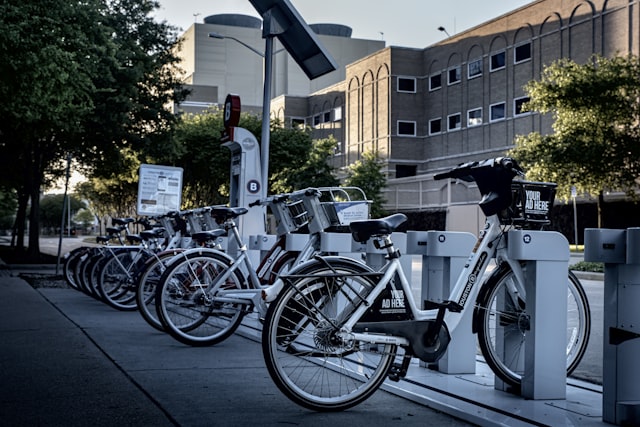
Frisco E-Bike

E-Bike Parts

Kickstands

Heavy-duty single and double-leg stands rated for e-bike weight.

Stock kickstands on many e-bikes are the first thing to fail: they bend, the bolt loosens, or the stand is simply too short for a loaded bike and it tips over onto the derailleur. A stand rated for e-bike weight, with an adjustable length and a solid mount, keeps a 60 or 70 pound bike upright in a breeze and on uneven ground, and it is a cheap fix for a problem that bends hangers and cracks displays. The stand is also what the bike rests on while you load panniers or a child, so stability under load matters.

Mount type is the key fit issue. Most e-bikes use a rear chainstay plate mount with two bolts at a standard spacing (often 18mm or 40mm between bolt centers), or a single-bolt center mount behind the bottom bracket. Some frames have a dedicated plate with its own bolt pattern. Double-leg center stands lift the rear wheel slightly and are the most stable, especially for loading cargo or a child seat, but need bottom bracket area clearance and can interfere with crank arms on some frames.

Length must be adjustable to suit wheel size; a 20-inch fat bike and a 29er need very different stand heights. Confirm your mount style and bolt spacing on your bike before ordering. Stands rated in pounds or kilograms are not standardized across makers, so treat the rating as a guide and favor stands with thick legs, a wide foot and a solid mounting plate. A spring that snaps the stand up firmly keeps it from bouncing down on rough roads.

2 products

Shop kickstands

Open a product for our full notes, pros and cons, and the link to its Amazon listing. We do not sell or ship products ourselves.

Close-up of bicycle gears and chain
Kickstands

Heavy-Duty Adjustable Side Kickstand, 24–29-Inch (generic)

The stock side stand on many e-bikes is too weak for a 60–75 pound bike and folds under on soft ground. A heavy-duty alloy side stand with an adjustable-length leg and a wide foot is the common upgrade. Most mount through the standard chainstay plate behind the bottom bracket; some bikes have a dedicated rear-mount plate at the dropout, so check yours before ordering. Adjust the leg so the bike leans about ten degrees — too upright and it tips in a breeze, too far and the handlebars flop. A thicker foot also helps on hot asphalt.

Best for: Replacing a weak stock side stand · Bikes with a standard chainstay mount plate · Riders who park on uneven ground

Electric bicycle parked on a sidewalk
Kickstands

Ursus Jumbo Double-Leg Center Kickstand

The Ursus Jumbo is the double-leg center stand that many cargo and commuter e-bike makers fit as original equipment, and it is what you buy when you are tired of the bike tipping over with a child seat or panniers on it. Two legs lift the rear wheel slightly and hold the bike upright, which also makes chain work easier. It mounts to the standard plate behind the bottom bracket with a single bolt and is rated for heavy bikes. It is heavier than a side stand and needs chainstay clearance; measure before ordering the length variant.

Best for: Cargo and long-tail e-bikes · Bikes carrying child seats or heavy panniers · Anyone who does their own chain maintenance

How to choose kickstands

Mount type

Rear chainstay plate (two-bolt) or center mount (single bolt behind the bottom bracket). Match your frame's mount.

Bolt spacing

For two-bolt mounts, measure center to center; 18mm and 40mm are common. Adapters exist but add flex.

Weight rating

Look for a stated rating comfortably above your bike's weight plus typical cargo.

Single or double leg

Double-leg center stands are most stable and good for loading; single-leg stands are lighter and simpler.

Length adjustment

Adjustable length to set the lean angle for your wheel size and tire.

Compatibility notes

  • Mount type and bolt spacing must match your frame; confirm by measuring your current stand's bolts or your frame's mount.
  • Double-leg center stands need clearance from the crank arms and the chain; confirm on your bike.
  • Some e-bikes have integrated stands that only accept the brand's replacement.

Installation considerations

  • Clean the mount face, fit the stand, and torque the bolt firmly; use thread locker on stands that vibrate loose.
  • Set the length so the bike leans slightly but stands firmly on level ground with a full battery.
  • Check the stand clears the crank arm and pedal when folded and deployed.

Maintenance tips

  • Retighten the mounting bolt occasionally; a loose stand rotates and lets the bike fall.
  • Lubricate the pivot lightly so the stand snaps up and down cleanly.
  • Do not let a stand that sags or bends ride; replace before the bike falls on its derailleur.

Frequently asked questions

What kickstand fits my e-bike?

Identify the mount: a plate on the chainstay with two bolts (measure the spacing) or a single bolt behind the bottom bracket. Then pick a stand with a rating above your bike's weight and adjustable length.

Is a double-leg stand worth it?

For cargo, child seats or frequent loading, yes; the bike stands upright and stable. For a light commuter a good single-leg stand is enough.

Why does my bike keep tipping over on the stand?

Stand too short for the wheel size, a bent or loose stand, or parking on soft ground. Adjust length, tighten the bolt, and park on firm surfaces.

Can I use a kickstand on a fat-tire bike?

Yes, with a stand sized for the wheel and strong enough for the bike; wide-foot stands resist sinking into soft ground.

Where should the bolt spacing be measured?

Center to center of the two mounting bolts on the chainstay plate. 18mm and 40mm are common standards.

More e-bike parts categories