Frisco E-Bike

Troubleshooting · updated 2026-08-22

E-Bike Pedal Assist Not Working

  • Throttle works but pedaling gives no assist
  • Assist kicks in late, cuts out, or surges while pedaling
  • Assist works in some levels but not others
  • Assist stopped after a crank, pedal, chainring or bottom bracket job
  • Display shows an error code when you pedal

Pedal assist depends on one small sensor telling the controller you are pedaling. On most hub-motor bikes that is a cadence sensor: a ring of magnets on the crank spindle passing a sensor clipped to the bottom bracket. On torque-sensor bikes it is a strain sensor in the bottom bracket or dropout. If that signal is missing, weak, or intermittent, the controller sits idle no matter how hard you pedal.

Because the throttle uses a different input, a working throttle with dead pedal assist points straight at the PAS chain: the assist level, the brake cutoffs (which block both), the magnet disc and its gap, the sensor connector, and finally the sensor itself. Most fixes are free. A magnet disc that slid out of place after a crank job is the single most common cause we see.

Safety first

Never open a battery pack. Stop immediately if you see swelling, smell burning, or feel heat at the battery or connectors. Do not cut or splice wires. Unplug the battery before touching connectors. When in doubt, stop and get an E-Bike Assessment.

Possible causes

  1. Cause 1

    Assist level set to zero or a mode setting

    PAS 0 means no pedal assist by design. Some displays also have an eco or custom mode with very low assist in level 1 that feels like nothing at low cadence. A firmware reset can return settings to defaults that feel different.

    Safe checks

    • Press + until the display shows PAS 1 or higher; try level 3 to make sure assist is obvious.
    • Check the display menu for a PAS sensitivity, magnet count, or assist mode setting and compare to the manual's defaults.

    Related parts: E-Bike Displays, E-Bike Controllers

  2. Cause 2

    Brake cutoff switch holding the system off

    Brake sensors block assist as well as the throttle, but a slightly stuck lever can block PAS intermittently and make it feel like a PAS problem. If the throttle also sometimes drops out, check the brakes first.

    Safe checks

    • Confirm both levers return fully; look for a brake icon on the display.
    • Battery out: unplug one brake sensor at a time and test. Reconnect before riding.

    Related parts: Brake Levers, Connectors & Plugs

  3. Cause 3

    Cadence magnet disc loose, shifted, or reversed

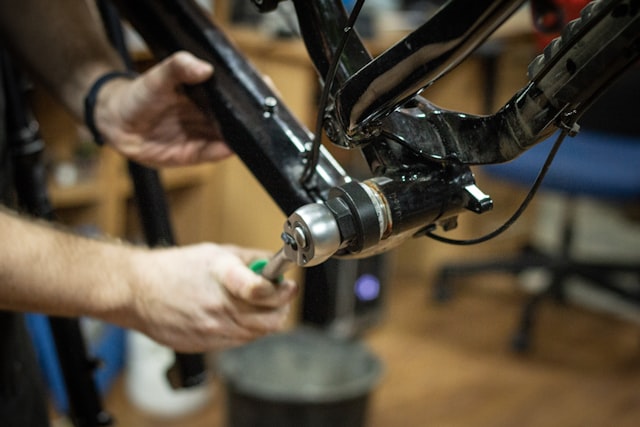
    The magnet disc is a plastic ring with small magnets that presses onto the crank spindle or bolts to the crank arm. It must sit flat, spin with the crank, and pass within about 2–4 mm of the sensor head. A disc that slid inward, cracked, or was reinstalled backward (some are directional) after a crank or bottom bracket job produces no signal or a weak one. Rear-mounted sensors on some bikes look at a disc behind the chainring.

    Safe checks

    • Find the sensor (a small plastic box near the bottom bracket with a thin cable) and the magnet disc beside it; spin the cranks and confirm the disc turns with them.
    • Check the gap: magnets should pass close to the sensor face. If the disc has slid, carefully push it back to its original position (it is often a friction fit) without forcing.
    • Look for a cracked disc or missing magnets. If you recently did a crank job and the bike has a directional sensor, check whether the disc is installed the right way round.

    Related parts: Pedal Assist Sensors, Cranksets

  4. Cause 4

    PAS sensor connector loose or corroded

    The sensor cable runs from the bottom bracket to a small connector, often near the down tube or the controller. It lives in the spray zone, so moisture and corrosion are common, and a cable snagged by a stick or a kickstand pulls it loose.

    Safe checks

    • Battery out: follow the sensor cable to its connector, unplug, check for green or white deposits and pushed-back pins, reconnect firmly.
    • Inspect the cable for crush damage near the chainstay or kickstand plate.
    • Dry any moisture and retest.

    Related parts: Connectors & Plugs, Wiring Harnesses, Pedal Assist Sensors

  5. Cause 5

    Torque sensor fault or calibration

    Torque sensor bikes measure how hard you push; some need a calibration at power-on with no weight on the pedals, and a foot resting on a pedal during boot throws it off. Sensors in the bottom bracket can also fail or lose their connection after a bottom bracket service. Weak or surging assist that does not track your effort points here.

    Safe checks

    • Power the bike off, take your feet off the pedals, power on, and wait for the display to finish booting before pedaling.
    • Check the bike's menu or manual for a torque sensor calibration procedure and run it.
    • Battery out: inspect the sensor connector near the bottom bracket as above.

    Related parts: Pedal Assist Sensors, Connectors & Plugs

  6. Cause 6

    Sensor or controller input failure

    Cadence sensors do die — a cracked sensor head, a broken wire inside the sheath, or a failed hall element. Controllers can also lose the 5V sensor supply, which typically kills the throttle and PAS together. If the disc is in place, the gap is right, the connector is clean, and settings are correct, the sensor is the next suspect; it is an inexpensive part but must match your connector and magnet count.

    Safe checks

    • Rule out everything above first; note whether the throttle also stopped (points at the shared supply or controller).
    • Look for a PAS-related error code in the manual.
    • A matching replacement sensor (connector type, magnet count, directional or not) is the repair; if unsure which, get it assessed rather than guessing.

    Related parts: Pedal Assist Sensors, E-Bike Controllers, Connectors & Plugs

Safe basic checks, in order

  1. 1

    Set assist to 3 and retest

    Rule out PAS 0 and low-assist modes first.

  2. 2

    Boot with feet off the pedals

    Torque sensor bikes calibrate at startup; power-cycle with no weight on the pedals.

  3. 3

    Check brake lever return and cutoff icon

    Both levers fully at rest; isolate sensors one at a time if needed.

  4. 4

    Inspect the magnet disc and gap

    Disc turns with the crank, sits flat, 2–4 mm from the sensor, no cracks or missing magnets, correct orientation.

  5. 5

    Check the PAS connector

    Battery out. Clean, aligned, tight, no cable damage.

  6. 6

    Test the throttle

    Throttle working while PAS does not isolates the PAS path; both dead points to brakes, supply or controller.

  7. 7

    Note any error code

    Look it up for your brand before ordering a sensor.

When to stop troubleshooting

  • Throttle and PAS both died and the brake-sensor isolation did not bring them back.
  • The sensor cable is cut, crushed or pulled out of its housing — do not splice it.
  • The crank or bottom bracket is loose or creaking, which needs proper tools and torque.
  • A motor, hall, or controller error code accompanies the dead assist.
  • You are unsure which replacement sensor matches your bike — a wrong sensor wastes money and time.
  • If none of the safe checks above turn anything up, stop guessing and start an E-Bike Assessment at friscoebikerepair.com/assessment/ — describe the symptom, your bike, and what you have already checked, and you will get a clear next step instead of buying parts on a hunch.
Not sure what’s wrong? Get an E-Bike Assessment

Opens Frisco Ebike Repair$19.99 flat, report with likely causes and next steps.

Advertisement

Frequently asked questions

Why does pedal assist take a second to kick in?

Cadence sensors need a few magnets to pass before the controller sees pedaling, typically a quarter to half a pedal revolution. That delay is normal. A longer delay can mean a disc with a large gap or some missing magnets.

Can I replace the PAS sensor myself?

Often yes — most clip or bolt to the bottom bracket and plug into the harness. Match the connector, number of magnets and direction. Removing the crank arm to get at it requires a crank puller, so that part may be a shop job.

My assist surges and drops while pedaling. Is the sensor bad?

Usually the magnet disc has a large or uneven gap, is wobbling, or the connector is intermittent. Check the disc and connector before replacing the sensor. On cadence systems, some surging at low speed in high assist is also simply how they behave.

What is the difference between cadence and torque sensors?

A cadence sensor detects that the cranks are turning and gives a set amount of power per assist level. A torque sensor measures how hard you push and scales power to effort, which feels more natural. They are not interchangeable without controller support.

Can a brake problem cause pedal assist to fail?

Yes. A brake cutoff switch that stays triggered blocks both assist and throttle. It is one of the first things to check on any no-power complaint.

Parts that commonly fix this

Only order once you have confirmed the cause — mismatched electrical parts can damage a controller or battery.