E-bike rated chains with stronger plates; match your speed count.
Chains on e-bikes wear faster than on regular bikes because motor torque, especially from a mid-drive, runs through the chain constantly, and riders tend to shift under load. A worn chain does not just skip; it wears the cassette and chainring to match it, turning a cheap replacement into an expensive one. Checking chain wear and replacing on time is the single most cost-effective piece of e-bike maintenance. On a hub-drive bike the chain mostly carries your own pedaling, but the higher cruising speeds still mean more revolutions and more wear per mile than a regular bike.
Chains are sized by speed count, which sets their width: 6, 7 and 8 speed chains share one width, 9 is narrower, then 10, 11 and 12 get progressively narrower. Match your cassette or freewheel's speed count. Beyond that, e-bike rated chains (several makers sell them) use harder pins and thicker plates to survive motor torque; they are worth it on mid-drives and for heavier riders, and harmless on hub-drive bikes. Length is set by matching your old chain link for link, or by the big-big plus two method on a derailleur bike.
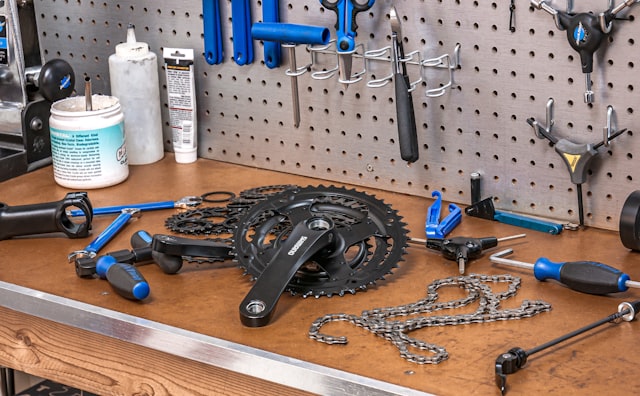
Quick links make installation toolless but are speed-specific and, on 11 and 12 speed, often single-use. Keep a spare on the bike. And remember the chain is part of a system: a new chain on a worn cassette will skip, so check the cogs when you replace it. Confirm your speed count on your bike before buying. A spare quick link and a small chain tool in the bag turn a broken chain from a walk home into a five-minute stop.