Frisco E-Bike

E-Bike Parts

E-Bike Tires

E-bike rated tires with puncture protection in the common 20×4, 26×4, 27.5 and 700c sizes.

Tires are the part you will replace most often on an e-bike. Motor torque, higher sustained speed and rider-plus-bike weight wear tread faster than on a regular bike, and Texas roads add goatheads, glass and summer heat. A good e-bike tire buys you fewer flats, better braking and more comfort, and it is one of the few upgrades you can feel on the first ride. Most e-bikes ship with tires chosen for price rather than for the weight and speed the bike actually sees, so an upgrade at the first replacement is common and sensible.

Sizing is where orders go wrong. Your sidewall shows a size like 20x4.0, 26x2.1 or 700x38c, and usually an ETRTO number like 100-406, 54-559 or 40-622. The ETRTO number is the one to trust: the second figure is the rim diameter in millimeters (406 for most 20-inch fat and folding bikes, 559 for 26-inch, 584 for 27.5-inch, 622 for 29-inch and 700c) and the first is tire width. Two tires both labeled 20-inch can be for different rims, and the ETRTO number settles it. Width must suit your rim and clear the frame, fork and fenders.

Then look for e-bike-specific features: puncture protection belts, reinforced sidewalls, reflective stripes, and an e-bike speed rating (often shown as E-25 or E-50 on European brands). Tread pattern matters less than people think for street riding; a semi-slick or light-tread tire rolls faster and grips pavement better than knobs. Confirm on your bike that the width you want clears everything before ordering. If you are unsure, take a photo of the sidewall markings and compare them against the listing before you click buy.
1 products

Shop e-bike tires

Open a product for our full notes, pros and cons, and the link to its Amazon listing. We do not sell or ship products ourselves.

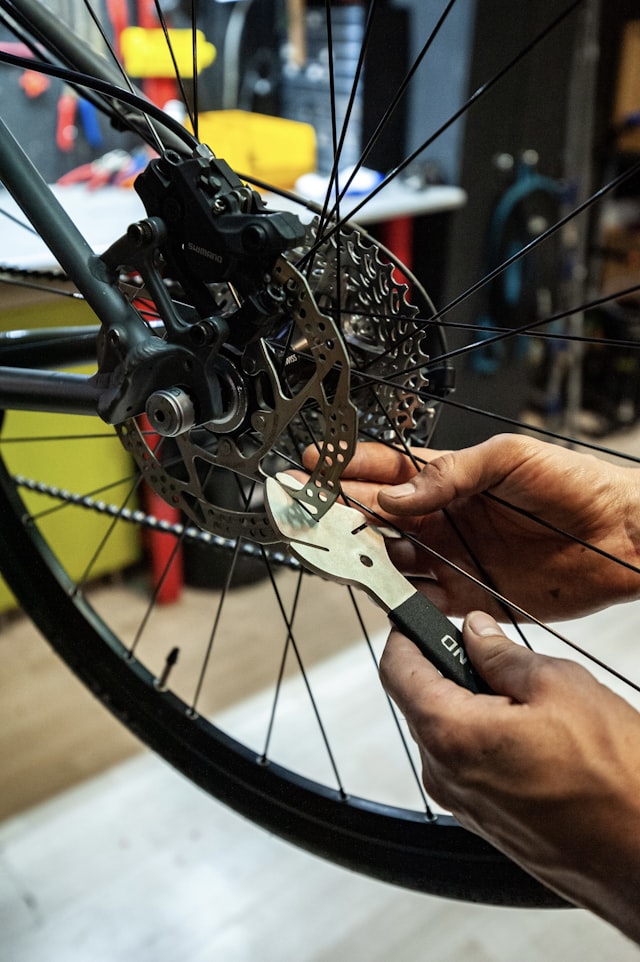
Bike maintenance in a workshop
E-Bike Tires

Schwalbe Super Moto-X 27.5x2.40 E-Bike Tire

The Super Moto-X is Schwalbe's heavy-duty balloon tire for fast, heavy e-bikes, and it is one of the few 27.5-inch tires that combines a smooth, quick-rolling tread with a serious puncture belt and an e-bike speed rating. It is a common original-equipment tire on premium commuters and a popular upgrade on mid-range 27.5 hardtail-style e-bikes that came with knobbies. The wide 2.40 casing soaks up rough pavement. It is heavier and pricier than a basic tire, but owners tend to replace it with another one, which says a lot.

Best for: 27.5-inch commuter and hybrid e-bikes · Riders who want comfort and puncture protection on pavement · Replacing knobby tires on a street-ridden hardtail e-bike

How to choose e-bike tires

ETRTO size

Match the rim diameter number exactly and choose a width the rim and frame allow. When the sidewall is unreadable, the bike's spec sheet lists the size.

Puncture protection

Look for a protection belt under the tread and ideally reinforced sidewalls. In North Texas, this is worth more than any other feature.

E-bike rating and load

E-bike-rated tires have stronger casings and higher load ratings suited to a 60-plus-pound bike with a rider. Check the max load if you are heavy or carry cargo.

Tread and compound

Street riding favors smooth or light tread. Knobs add noise and rolling resistance on pavement. Softer compounds grip better but wear faster.

Reflective sidewall

A reflective stripe is a real visibility boost at night and costs little extra.

Tube or tubeless

Most e-bike tires run tubes; tubeless-ready tires need a compatible rim and sealant. Decide which system you are running before you buy.

Compatibility notes

  • Match the ETRTO rim diameter exactly; a 20-inch tire for a 406 rim will not fit a 451 rim. Confirm on your sidewall or bike spec.
  • Width must fit the rim's internal width range and clear frame, fork, fenders and any motor cable; confirm on your bike before going wider.
  • Tubeless-ready tires need a tubeless-compatible rim and tape; a standard rim should run a tube.

Installation considerations

  • Note the rotation arrow on the sidewall and mount accordingly.
  • On hub-motor wheels, unplug or carefully route the motor cable and use a torque arm on reassembly; removing the wheel is the hard part, not the tire.
  • Seat the bead evenly by inflating in stages and checking the mold line sits a consistent distance from the rim all the way around.
  • Inflate within the range printed on the sidewall; fat tires usually run far lower than commuter tires.

Maintenance tips

  • Check pressure weekly; under-inflation is the top cause of pinch flats and worn sidewalls on heavy bikes.
  • Inspect tread for embedded glass or thorns after rides and pick them out before they work through.
  • Rotate rear to front when the rear wears faster, if both tires are the same size.

Frequently asked questions

What size tire does my e-bike take?

Read the sidewall of your current tire for a size like 20x4.0 and, more importantly, the ETRTO number like 100-406. Match the rim diameter number exactly and pick a width your rim and frame allow.

Can I put narrower tires on my fat-tire e-bike?

Somewhat. Fat rims are wide, so you can typically drop from 4.0 to around 3.0 inches for a faster roll, but going too narrow on a wide rim is unsafe. Check the rim's internal width and the tire maker's range.

Are e-bike-rated tires necessary?

Not strictly, but they have stronger casings and higher load ratings, and the difference shows up as fewer sidewall failures and flats on a heavy bike. For daily riding they are worth it.

How often should I replace e-bike tires?

When the tread is worn flat in the center, the sidewalls crack, or flats become frequent. Rear tires on hub-motor bikes commonly wear out in 1,000 to 2,500 miles depending on compound.

What pressure should I run?

Within the range printed on the sidewall, toward the higher end for heavier riders and lower for comfort. Fat tires often run 10 to 20 psi; commuter tires 40 to 65 psi.

More e-bike parts categories