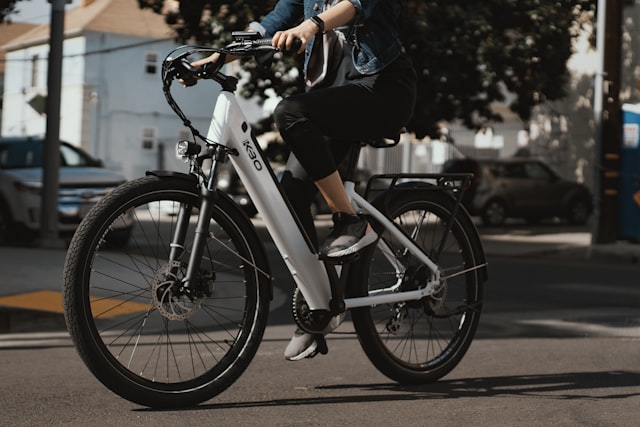
Commuter E-BikesFeatured
Aventon Level.2 Commuter E-Bike
Best for: Daily pavement commuting · Riders who want natural-feeling pedal assist · Anyone who wants fenders, rack and lights out of the box
View details & where to buy
Sold on Amazon
Comparison · updated 2026-08-22
Fat-tire e-bikes, with 4-inch-wide tires on 20- or 26-inch wheels, have become one of the best-selling styles in the US, partly because they look tough and partly because they ride softly on broken pavement. Standard-tire e-bikes use the 1.75- to 2.6-inch widths you find on hybrids, commuters and mountain bikes. The width choice changes how the bike rolls, how much it weighs, how far a charge takes you and how much effort it is to fix a flat.
Around Frisco and the northern suburbs, where most riding happens on concrete paths, neighborhood streets and the occasional crushed-gravel trail, both styles work. The question is what you value: the plush ride and stability of fat tires, or the efficiency, lighter weight and easier service of a standard tire. Below we lay out the differences honestly, including a few that fat-tire marketing tends to skip.
A
Wide, low-pressure tires that float over sand, gravel and rough pavement and soak up bumps without suspension. Heavier, slower-rolling and thirstier on the battery, but stable and confidence-inspiring.
B
Conventional widths found on commuter, hybrid and mountain e-bikes. Lighter, more efficient, easier to fix and available in more puncture-resistant options. Less cushioning on rough surfaces.
| Criterion | Fat Tire (4-inch) | Standard Tire (1.75–2.6 inch) |
|---|---|---|
| Ride comfort | Excellent on cracked concrete and expansion joints. Runs at 15–25 psi and acts as built-in suspension. | Firmer at 40–65 psi. Comfortable on smooth paths; a suspension fork or seat post helps on rough ones. |
| Rolling efficiency and range | High rolling resistance. Expect meaningfully less range from the same battery, often 15–30 percent less. | Lower rolling resistance. More miles per watt-hour and easier pedaling if the battery runs out. |
| Weight | Tires, tubes and rims add several pounds; complete bikes commonly weigh 65–80 lb. | Lighter wheels; complete bikes typically 45–65 lb, and lightweight models under 40 lb. |
| Traction and surfaces | Best on sand, loose gravel, wet grass and snow. Feels planted on uneven ground. | Fine on pavement and hardpack. Skinny tires can wash out in sand or deep gravel. |
| Flat tires | Fewer pinch flats at low pressure, but changing a 20x4 or 26x4 tube on a motor wheel is a workout. Tubes and tires cost more. | Easy to remove and reseat; tubes are cheap and found at any bike shop. More puncture-resistant tire options. |
| Handling | Slower steering and more self-centering. Stable but less nimble in tight spaces. | Quicker steering and easier to thread through traffic or trail gates. |
| Noise | Knobby fat tires hum audibly on pavement. | Slick or semi-slick treads are quiet. |
| Storage and transport | Wider bikes need bigger racks and fat-tire-compatible trays; folding fat bikes are still bulky. | Fits most car racks and wall hooks without adapters. |
| Typical buyers | Riders who want a plush, stable, go-anywhere feel, including heavier riders and those on rough suburban paths. | Commuters, fitness riders, anyone who carries the bike upstairs or wants maximum range. |
Advertisement
Pick fat tires if comfort and stability matter more to you than efficiency: you ride broken concrete paths, cross grass or gravel, carry a lot of weight, or simply like the planted feel. Fat tires cover for a missing suspension fork and are forgiving for new riders. Accept the heavier bike, shorter range and more involved flat repair, and budget for a floor pump with a gauge so you can keep pressures dialed, since a few psi makes a big difference at these widths.
Pick standard tires if you commute, ride longer distances, lift the bike onto racks or up stairs, or want the simplest possible maintenance. A 2.2- to 2.6-inch tire on a commuter or hybrid e-bike gives most of the comfort with far less penalty, and puncture-resistant options are plentiful. Whichever you choose, if your tire keeps going flat or the bike developed a wobble after a wheel change, our tire troubleshooting page and the E-Bike Assessment can help you sort out what is going on.
Best for: Daily pavement commuting · Riders who want natural-feeling pedal assist · Anyone who wants fenders, rack and lights out of the box
Sold on Amazon
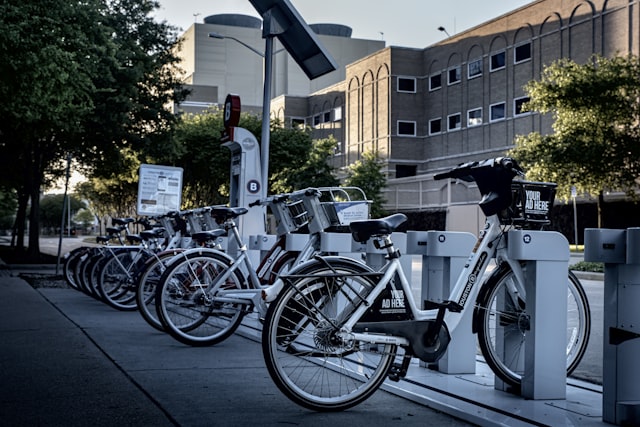
Best for: Gravel, dirt roads and park trails · Riders who want one bike for pavement and rough stuff · Heavier riders who want a stout frame
Sold on Amazon

Best for: Faster suburban commutes · Riders who want fenders, rack and lights included · Value-focused buyers
Sold on Amazon
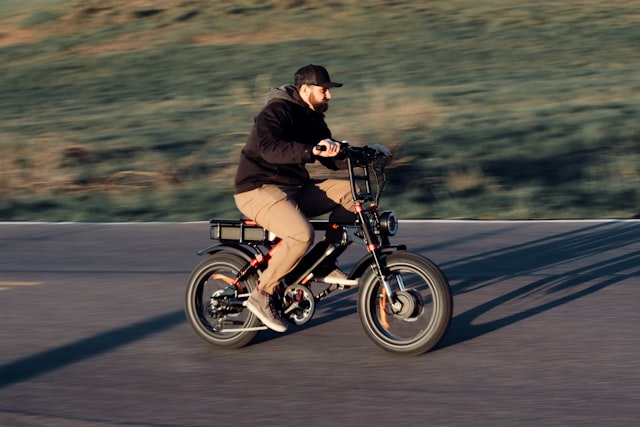
Best for: All-terrain recreation · Riders who want a proven platform · Accessory-heavy setups (racks, baskets, trailers)
Sold on Amazon
Yes. Wider, knobbier tires at low pressure have more rolling resistance, and fat-tire bikes are heavier overall. Riders commonly see 15–30 percent less range than on a comparable standard-tire bike. Running the tire at the upper end of its pressure range on pavement helps.
They are more stable at low speed and on loose surfaces, which some riders experience as safer. They do not stop shorter; braking depends on the brakes, rotor size and tire compound. Their extra weight can make them harder to handle when walking or lifting.
Often you can go somewhat narrower, for example from 4.0 to 3.0 inches, if the rim width allows. You cannot turn a fat bike into a road bike; the rims, fork and frame are built for width. Check the rim's recommended tire range before buying.
Follow the range printed on the sidewall. On pavement, most riders do well toward the top of the range (around 20–30 psi depending on the tire) for efficiency; on sand or gravel, lower pressure adds grip and comfort. Check pressure weekly; big tires lose air too.
No. 20x4 bikes are shorter, often foldable and easier to store, with quick handling and a lower seat height. 26x4 bikes roll over bumps better and feel more like a full-size mountain bike. Both use the same 4-inch width.