Frisco E-Bike

Buyer guide · updated 2026-08-22

Best Tire Repair Kits

A flat on an e-bike is a bigger deal than on a regular bike. The bike weighs 60 to 80 lb, the rear wheel has a motor with a cable attached, and you are probably farther from home than you would have pedaled unassisted. North Texas adds goatheads and mesquite thorns to the mix. The goal of a repair kit is simple: get rolling again without removing the rear wheel if you can avoid it, and without walking.

This guide covers the pieces of a real kit (patches or plugs, levers, a pump, and optional sealant) rather than one all-in-one box, because the right combination depends on whether you run tubes or tubeless and whether your tires are 2-inch commuter rubber or 4-inch fat. Most e-bikes sold here have tubes; eMTBs and some premium commuters run tubeless, and the tools are completely different.

If the same tire keeps going flat, the kit is treating a symptom. Our troubleshooting page on tires that keep going flat covers rim tape, tire liners, thorn-resistant tubes and finding the cause.

Affiliate Disclosure: We may earn a commission when you purchase through links on this page, at no additional cost to you. As an Amazon Associate I earn from qualifying purchases. Learn more

Our picks at a glance

  1. Best roadside patch kit

    Park Tool GP-2 Super Patch Glueless Patch Kit

  2. Best for tubeless tires

    Dynaplug Racer Pro Tubeless Repair Tool

  3. Best garage patch kit

    Rema Tip Top TT02 Touring Patch Kit

  4. Best flat prevention for thorn country

    Slime Tube Sealant (Schrader / Presta)

  5. Best levers for fat tires

    Pedro's Tire Levers (pair)

  6. Best roadside pump for e-bike tires

    Topeak Mountain Morph Mini Floor Pump

How we picked

Fit for e-bike tires and ease of use are weighted heaviest, because a kit that only works on a light road bike on a workbench does not help at the side of the Preston Ridge Trail. We separate roadside picks from garage picks and say which is which. Scores reflect our product editorial and the experience of fixing flats on hub-motor bikes, where keeping the rear wheel on is half the battle.

We do not pick based on Amazon reviews or ratings and we do not quote prices. Where a product has a shelf life, such as vulcanizing glue or sealant, we say so.

PickFit for e-bike tiresPortabilityValueDurability of the repairFeaturesEase of use
Park Tool GP-2 Super Patch Glueless Patch Kit4/55/55/53/52/55/5
Dynaplug Racer Pro Tubeless Repair Tool5/55/53/54/54/54/5
Rema Tip Top TT02 Touring Patch Kit4/53/54/55/53/53/5
Slime Tube Sealant (Schrader / Presta)4/53/55/53/53/54/5
Pedro's Tire Levers (pair)5/54/55/54/53/55/5
Topeak Mountain Morph Mini Floor Pump5/53/54/54/54/54/5
  • Fit for e-bike tires: How well it works on thick tubes, tight fat-tire beads, tubeless casings and a heavy bike you would rather not flip over.
  • Portability: Size and weight in a saddle bag or frame bag; whether it is a roadside tool or a garage tool.
  • Value: Repairs per dollar and whether it needs restocking.
  • Durability of the repair: Whether the fix lasts the life of the tube or tire or is a get-home measure.
  • Features: Extras that matter: gauge, hose, multiple plug sizes, spoke hook, shelf life.
  • Ease of use: How hard it is to do right at the roadside with dirty hands and a heavy bike leaning on you.
City bike with a backpack

1. Best roadside patch kit

Park Tool GP-2 Super Patch Glueless Patch Kit

A tiny box of self-adhesive patches and a sandpaper square that fits any saddle bag and never dries out. Scuff the tube, press hard, reinstall; no waiting for glue to flash off. It handles thorn and glass punctures reliably and is not for big gashes or valve-base tears. Buy a pack for every bike.

Pros

  • Fast
  • No glue
  • Tiny

Considerations

  • Less permanent than vulcanized patches for some
  • Small punctures only
Bike with a rear cargo bag

2. Best for tubeless tires

Dynaplug Racer Pro Tubeless Repair Tool

For tubeless e-bikes, a plug tool is the only practical roadside repair, and the Racer Pro is the least fiddly: a machined aluminum tool with pre-loaded brass-tipped rubber plugs that you push into the hole and pull out, then add air. It works without removing the wheel or tire, which matters on a heavy bike with a hub motor. If you run tubes, skip it and buy patches.

Pros

  • Fast plug repair
  • No tire removal
  • Compact and well made

Considerations

  • Tubeless only
  • Premium price
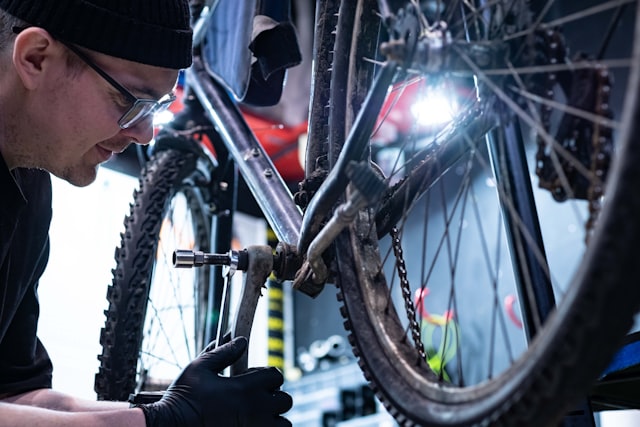
Technician servicing a bike in a garage

3. Best garage patch kit

Rema Tip Top TT02 Touring Patch Kit

The feathered-edge patches and vulcanizing fluid shops use in the back, in a small tin with a range of sizes that suits a 20-inch folder tube or a fat-tire tube. Done right, the patch becomes part of the tube for life. The cement is perishable and needs cure time, so it lives in the garage while glueless patches ride on the bike.

Pros

  • Excellent bond
  • Multiple patch sizes
  • Trusted by mechanics

Considerations

  • Not a roadside kit for hurried riders
  • Cement perishable
Bicycle locks and chains on a wall

4. Best flat prevention for thorn country

Slime Tube Sealant (Schrader / Presta)

North Texas is goathead and mesquite-thorn country, and a few ounces of sealant in each tube plugs small punctures as you ride. It will not fix large cuts or pinch flats, adds some weight and makes future patching messier, but for owners who hate fixing flats on a heavy bike it is a sensible trade. Your valves need removable cores to install it.

Pros

  • Seals small punctures automatically
  • Cheap
  • Easy install

Considerations

  • Messy
  • Limited to small holes
  • Can clog valve cores
Tools hanging on a repair shop wall

5. Best levers for fat tires

Pedro's Tire Levers (pair)

Wide, flat plastic levers that are very hard to break and do not chew rims, which is why they are the standard recommendation for tight fat-tire and plus-size beads with thick tubes. They hook on a spoke while you work the second one around, and two weigh almost nothing in a bag. They eventually round off at the tip and you buy another pair.

Pros

  • Nearly unbreakable
  • Rim-friendly
  • Wide for fat tires

Considerations

  • Bulky
  • Plastic wears over time
Bike with a rear cargo bag

6. Best roadside pump for e-bike tires

Topeak Mountain Morph Mini Floor Pump

A mini pump that unfolds into a tiny floor pump with a foot peg, T handle and hose, so you push with body weight instead of forearms. Its high-volume design is one of the few frame-mountable pumps that can realistically reinflate a 4-inch fat tire on the roadside. It is longer and heavier than a road mini pump and has no gauge, so top off at home.

Pros

  • Floor-pump ergonomics on the road
  • High volume
  • Presta and Schrader

Considerations

  • Big for a mini pump
  • No gauge

Affiliate Disclosure: We may earn a commission when you purchase through links on this page, at no additional cost to you. Details

Advertisement

Plugs versus patches: know which tires you have

If your tire has a tube, you need patches (or a spare tube). If it is tubeless, you need plugs. Most e-bikes sold online have tubes; if you are not sure, look at the valve: a tubeless valve has a nut at the rim and a removable core, and the rim will be taped. Tubeless repairs are done from outside, plug in the hole, air up, ride, without touching the wheel, which is a gift on a hub-motor bike. Tube repairs mean getting the tube out, which on a rear hub-motor wheel means either removing the wheel (disconnect the motor cable, mind the torque washers) or, more often, pulling one side of the bead off and fishing out enough tube to patch without removing the wheel at all.

Glueless patches are for the road; vulcanizing patches are for the garage. Glueless ones are instant but are best thought of as a reliable get-home fix; a properly glued patch lasts the life of the tube. Carry glueless, and when you get home decide whether to glue over it or replace the tube. A thick fat-tire tube takes a larger patch than a road kit provides, so check patch size.

Levers for fat tires and a bead jack for home

Fat-tire beads are tight and the tubes are thick. Thin road levers snap; wide plastic levers like Pedro's work and protect the rim. Hook the first lever under the bead and onto a spoke, then walk the second lever around. For wire-bead fat tires that plastic will not budge, steel-core levers exist, but they are garage tools. The last six inches of getting a tight tire back on is where people ruin thumbs and pinch tubes; a bead jack solves that at home and is worth owning if you change your own tires.

Before reinstalling, run your fingers around the inside of the tire to find the thorn or glass that caused the flat. If you skip that, you will patch the new tube in a mile. Check the rim tape too; an exposed spoke hole causes repeat flats that no kit will fix.

CO2 versus a pump

CO2 cartridges are fast and tiny, which is why roadies love them, but they are a poor match for e-bike tires. A single 16 g cartridge will not fill a 4-inch fat tire, and it barely fills a 2.4-inch commuter tire to riding pressure, so you need to carry several and they are one-use. CO2 also leaks through tubes faster than air, so the tire is soft by morning, and it can react badly with some sealants. A hand pump is slower but always works, and for fat tires a high-volume design with a hose and foot peg is the difference between inflating and giving up.

Small rechargeable electric inflators have become popular with e-bike owners and are a reasonable garage and car-trunk tool, with the caveats of battery life, heat after continuous use and so-so accuracy. For the bag, a manual pump is still the reliable choice; at home, a floor pump with a gauge readable in the 15 to 40 psi range is what keeps flats from happening, because underinflated tires pinch-flat and pick up more debris.

Sealant, liners and thorn-resistant tubes

Prevention is cheaper than repair. Tube sealant plugs small thorn punctures as you ride and is the best value defense in goathead season; it needs removable-core valves and makes patching messier later. Tire liners add a puncture-resistant strip between tire and tube at the cost of some weight and, if installed poorly, a new cause of flats at the liner's edge. Thorn-resistant tubes are simply thicker and work, but on a 4-inch tire they are heavy.

Tire pressure is the prevention nobody talks about. Check it weekly; e-bike tires are big and a few psi low feels fine until a curb pinch-flats the tube. If flats keep happening on one wheel, stop buying patches and go through our tire-keeps-going-flat troubleshooting page to find the cause.

Alternatives and who should skip this category

If you ride only a few miles from home on a tubed commuter bike, a glueless patch kit, two levers and a compact mini pump under the saddle are all you need, and sealant is optional insurance. If you run tubeless, replace the patches with a plug tool and keep a spare tube for the cut a plug cannot fill. Fat-tire riders should carry wide levers and a high-volume pump; a road mini pump will not get you home. Riders who would rather not fix flats at all should put sealant in both tubes and carry a phone and a lock instead.

Already own an e-bike that is acting up?

Before replacing it, find out what is actually wrong. An E-Bike Assessment gives you a clear report and next steps.


Frequently asked questions

Do I have to remove the rear wheel to fix a flat on a hub-motor e-bike?

Often not. Pull one side of the tire bead off, fish out enough tube to find and patch the hole, and reinstall. If the tube must come out entirely, the wheel must come off: disconnect the motor cable, note the torque washer orientation, and take photos first.

Glueless or glue-on patches?

Glueless on the bike for roadside repairs; glue-on vulcanizing patches at home for a permanent fix. Glue dries out once opened, so buy fresh tubes periodically.

Can I plug a tubed tire?

No. Plugs only work on tubeless tires. If you have tubes, patch or replace the tube.

Is CO2 enough for an e-bike tire?

Rarely. A single cartridge will not fill a fat tire and barely fills a 2.4-inch commuter tire. Carry a hand pump; a high-volume one with a hose for fat tires.

Does sealant work in tubes?

Yes for small thorn punctures, which are the common kind here. It needs valves with removable cores, adds some weight and will not fix large cuts or pinch flats.

What pressure should e-bike tires run?

Follow the range printed on the tire sidewall and your bike's manual. Fat tires often run in the teens to low 20s psi; commuter tires higher. Check weekly; low pressure causes pinch flats.