Frisco E-Bike

E-Bikes

Commuter E-Bikes

Efficient, comfortable bikes for daily rides to work, campus or errands.

A commuter e-bike has one job: get you to work, class or the grocery store reliably, day after day, without leaving you sweaty or stranded. That sounds simple, but it pushes the design in a specific direction. You want a fairly upright position so you can see traffic, tires in the 2 to 2.4 inch range that roll efficiently but still soak up chip-seal and curb cuts, and the boring stuff included from the factory: full fenders, a rear rack, integrated lights that run off the main battery, and a kickstand that does not fold under a loaded pannier.

Most commuter e-bikes sold online use a 500W to 750W rear hub motor with a 48V battery somewhere between 500 and 700 watt-hours. That combination gives a realistic 25 to 45 miles at moderate assist, which covers the vast majority of round-trip commutes in Frisco, Plano or McKinney with margin to spare. Cadence sensors are common at lower prices and feel like an on/off switch; torque sensors cost more but respond to how hard you pedal, which makes stop-and-go riding smoother and stretches range. Mid-drive motors show up on premium commuters and shine on hills, but North Texas is flat enough that a good hub motor is rarely a limitation.

What separates a commuter you keep from one you sell is how it holds up. Hydraulic disc brakes stop a 60-pound bike plus rider and bag with far less hand effort than mechanical calipers, and they need less adjustment. Look for a Class 2 or Class 3 designation that matches how fast you actually need to go, a weight rating that comfortably covers you plus cargo, and a brand that sells replacement chargers, batteries and brake pads. If a bike you already own has started cutting out, losing range or throwing errors, an E-Bike Assessment can help you figure out what is wrong before you spend money on a replacement.
6 products

Shop commuter e-bikes

Open a product for our full notes, pros and cons, and the link to its Amazon listing. We do not sell or ship products ourselves.

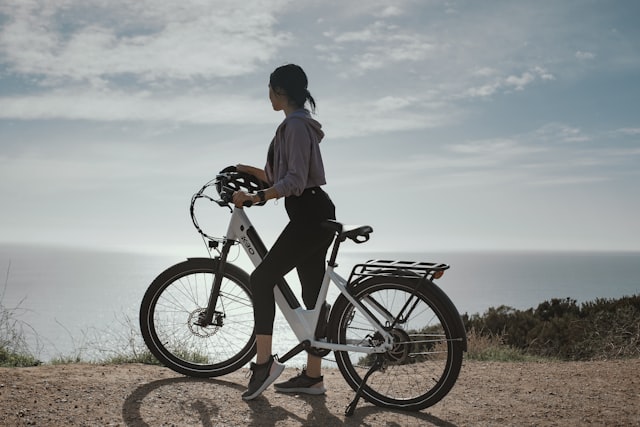
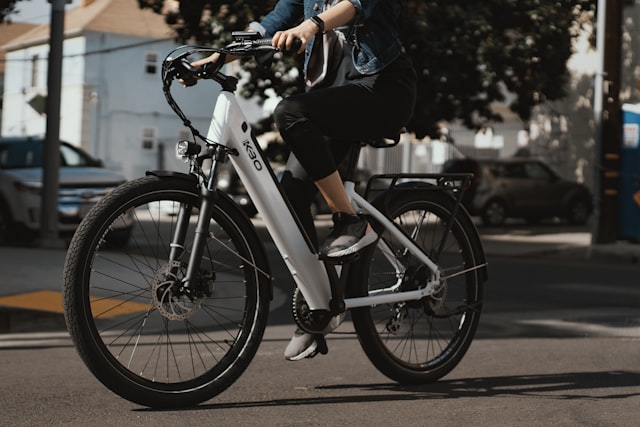
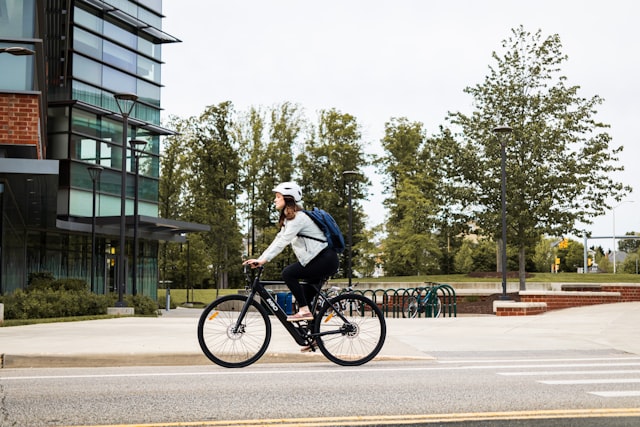
Rider on a white and black electric bike
Commuter E-BikesFeatured

Aventon Level.2 Commuter E-Bike

The Level.2 is the bike we point most daily commuters toward first. It pairs a 500W rear hub motor with a torque sensor, so assist ramps in with how hard you pedal rather than lurching on when the cranks turn. Fenders, a rear rack, integrated lights and hydraulic disc brakes come standard, which is rare at this price band. It ships as a Class 2 bike and can be unlocked to Class 3 in the app. It is heavy and the 48V 14Ah pack is average in size, but for a 5 to 15 mile commute on pavement it is hard to fault.

Best for: Daily pavement commuting · Riders who want natural-feeling pedal assist · Anyone who wants fenders, rack and lights out of the box

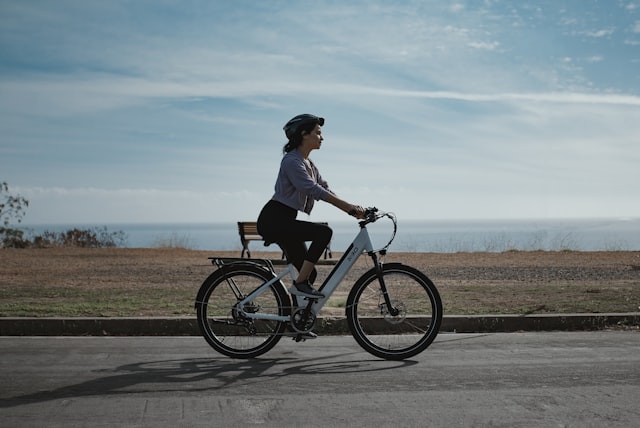
Rider on an electric bicycle on a paved road
Commuter E-BikesFeatured

Ride1Up 700 Series Commuter E-Bike

The 700 Series is Ride1Up's flagship commuter and a favorite for riders who want speed and a complete kit without paying Aventon money. It runs a 750W rear hub motor on a 48V 15Ah battery, hits Class 3 speeds, and ships with fenders, a rear rack, integrated lights, hydraulic brakes and a suspension fork. It uses a cadence sensor, so assist is more on/off than a torque-sensor bike, and it is heavy. Ride1Up sells direct with online support, so you or a local shop will handle service. For value per dollar in a fast commuter it is hard to beat.

Best for: Faster suburban commutes · Riders who want fenders, rack and lights included · Value-focused buyers

Rider on an electric bicycle
Premium E-BikesFeatured

Specialized Turbo Vado 4.0 Commuter E-Bike

The Turbo Vado 4.0 is the reference point for what a premium commuter feels like: a quiet Specialized mid-drive motor, a 710Wh battery integrated into the downtube, Class 3 speed, hydraulic brakes, a suspension fork, fenders, rack and lights, and a frame that comes in real sizes. The ride is smooth and the assist feels like strong legs rather than a motor. The cost is the obvious drawback, and it is sold through Specialized dealers, not Amazon, so searches will mostly turn up accessories and used listings. We include it so shoppers can see what the extra money buys and why shop support matters for mid-drive systems.

Best for: Riders who commute daily and want the best ride feel · Anyone who wants local dealer service · Longer and hillier commutes

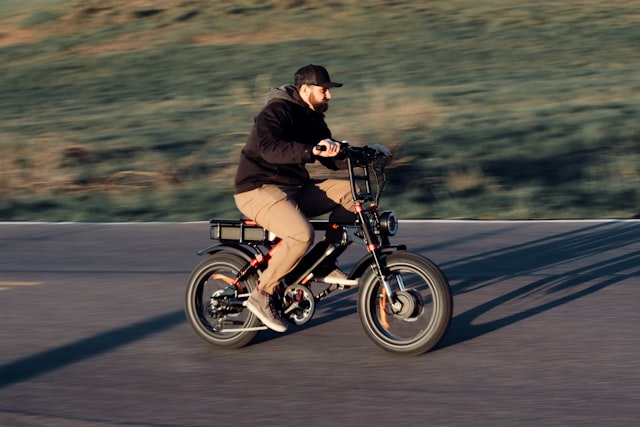
Man riding an e-bike down a street
Commuter E-Bikes

Rad Power Bikes RadCity 5 Plus Commuter E-Bike

The RadCity 5 Plus is Rad's commuter: 27.5-inch wheels with wide tires, a 750W hub motor, a 48V 14Ah semi-integrated battery, hydraulic brakes, a suspension fork, fenders, a rear rack and lights. It comes in high-step and step-through frames and carries Rad's wide range of racks and bags. It is a comfortable, stable commuter that is easy to recommend to a first-time rider who wants a known brand. The cadence sensor and weight are its main drawbacks, and newer competitors undercut it on price, but the accessory ecosystem and support history are real advantages.

Best for: Everyday commuting · Riders who want a full accessory ecosystem · First-time buyers who value a known brand

Rider on an electric bicycle on a road
Commuter E-Bikes

Schwinn Coston CE Commuter E-Bike

The Coston CE is Schwinn's step-through commuter with a 250W rear hub motor and a 36V battery hidden in the frame, plus fenders, a rear rack and integrated lights. It is intentionally a light-assist bike: the motor helps rather than propels, which keeps weight and price down and makes it feel like a normal hybrid. It is a good fit for flat-to-rolling commutes and riders who do not want a heavy, powerful machine. It is not for hills, heavy loads or anyone who wants throttle-driven speed, and the integrated battery means you charge the bike where it is parked.

Best for: Light-assist commuting · Riders who want a normal-bike feel · Flat suburbs

Rider on an electric bicycle on a road
Adult E-Bikes

Schwinn Marshall Hybrid E-Bike

The Schwinn Marshall is a full-size hybrid e-bike with a 250W rear hub motor and a 36V battery, offered in step-over and step-through versions with 27.5-inch wheels. It has a throttle and a simple display, which makes it more flexible than the pedal-assist-only Coston. It is a modest-power bike for flat neighborhoods and light commuting, and its appeal is the familiar Schwinn fit, wide retail availability and a lower price than most 48V bikes. Riders who want real acceleration or hill climbing should look at a 500W or 750W bike instead.

Best for: Adults who want a familiar hybrid fit · Flat neighborhood and light commuting · Riders who want a throttle on a light-assist bike

How to choose commuter e-bikes

Real-world range, not the headline number

Divide the battery's watt-hours by roughly 20 to estimate miles at moderate pedal assist. A 48V 14Ah pack (about 672Wh) is good for roughly 30 miles with some throttle use, less in summer heat with the assist turned up.

Brakes that match the weight

A commuter e-bike with rider and bag can weigh 250 pounds or more rolling at 20 mph. Hydraulic discs with 180mm rotors are worth the upgrade; mechanical discs work but need more frequent cable adjustment.

Included equipment

Fenders, a rack rated for 50 pounds or more, integrated lights and a sturdy kickstand can cost $150 to $250 added later. Bikes that include them out of the box are usually the better value.

Sensor type and assist feel

Cadence sensors are fine for flat, steady riding. If you stop at a lot of lights or want the bike to feel like your own legs, a torque sensor is the single biggest upgrade in ride quality.

Fit and adjustability

An adjustable stem and a frame size that matches your height matter more on a bike you ride daily than on a weekend toy. Check the manufacturer's height range rather than assuming one-size-fits-all.

Parts and support availability

Make sure the brand sells replacement batteries, chargers and brake pads and has a support line. A $200 saving up front is erased the first time a proprietary part is unavailable.

Maintenance tips

  • Check tire pressure weekly; under-inflated tires are the most common cause of poor range and flats on commuters.
  • Wipe and re-lube the chain every 100 to 150 miles, more often if you ride through rain.
  • Keep the battery between roughly 20 and 80 percent for daily use and avoid leaving it in a hot car or garage in July and August.
  • If the motor starts cutting out, range drops suddenly or the display shows errors, stop guessing and get an E-Bike Assessment.

Frequently asked questions

Is a Class 2 or Class 3 e-bike better for commuting?

Class 2 (throttle, 20 mph assist) is plenty for most urban commutes and is allowed in more places. Class 3 (28 mph pedal assist) is useful on long, open stretches, but check local trail and path rules — many multi-use paths limit you to Class 1 or 2.

How much range do I actually need?

Add up your round trip, then double it so you are not charging daily at full depth. For a 10-mile commute each way, a bike rated around 40 miles at moderate assist is comfortable; smaller packs work if you can charge at work.

Hub motor or mid-drive for a commuter?

A geared rear hub motor is quieter, cheaper and has fewer drivetrain wear parts, which makes it a sensible commuter choice on flat terrain. Mid-drives climb better and feel more natural, but they wear chains faster and cost more to service.

Can I ride a commuter e-bike in the rain?

Most are rated for rain riding (look for an IP rating on the display and battery), but none are meant to be pressure-washed or submerged. Wipe down connectors, and if the bike starts acting up after a soaking, get it assessed rather than poking at the wiring.

Are torque sensors worth the extra cost?

For daily riding, yes. A torque sensor makes starts smoother, uses less battery and feels like a normal bike with strong legs. Cadence-sensor bikes are fine if your budget is tight and the route is flat.

More e-bikes categories