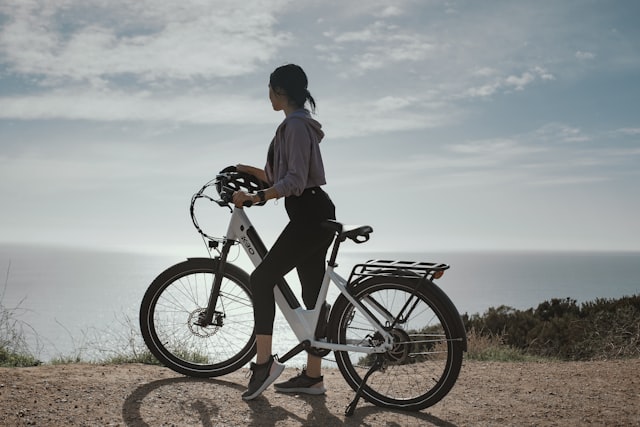
The under-$1,000 band is the sweet spot for a first e-bike. This is where 48V systems, hydraulic brakes, 500W to 750W motors and bikes that ship fully assembled become normal, mostly because Lectric and Ride1Up decided to compete here and everyone else had to follow. It is also where the gap between a good bike and a frustrating one is widest, because there are still plenty of 36V, mechanical-brake bikes priced up against far better ones.
Our picks favor bikes that are complete out of the box, have a real owner community and parts supply, and do not need a shop visit to be safe. Folders dominate this band because their 20-inch wheels and simple frames are cheap to build well. If you want a full-size commuter or fat bike with the same quality, you will usually spend a little more; the under-$1,500 guide covers that.
Why folders dominate this price band
Small wheels and a simple hinge frame are cheap to build, and 20-inch wheels are strong, so manufacturers can spend the budget on a 48V battery, hydraulic brakes and a better motor. That is why the XP 3.0 and Portola are more complete bikes than most full-size options at the same price. The trade-offs are a rougher ride over bumps, a slightly twitchier feel at speed, and weight; these folders are 60 to 70 lb and the fold is for a trunk, not a train.
If you want full-size wheels at this price you are choosing between a 36V commuter with mechanical brakes (Heybike Cityscape) or a budget mountain-styled bike from the under-$500 list. Both are fine for flat, short use; neither is as well-rounded as the folders.
Hydraulic brakes are the line
The single clearest quality marker at this price is whether the brakes are hydraulic. Hydraulic discs self-adjust as pads wear, need far less lever force, and stop a 65 lb bike with a rider from 20 mph with much more margin. Mechanical discs work, but they need periodic cable adjustment and they fade faster on long descents. If two bikes are close in price and one has hydraulics, that is the one.
Pay attention to the rotor size too; 180 mm rotors are becoming common on e-bikes and give more braking power than 160 mm. Replacement pads for the common hydraulic calipers on these bikes are cheap and widely available.
Battery size and the long-range upsell
Most bikes in this band ship with a 48V 10 to 13Ah battery (roughly 480 to 620Wh), which on a heavy folder means 20 to 35 miles of mixed assist. Several brands sell a larger battery as an option or upgrade. If you ride more than 15 miles at a time, the larger battery is worth choosing at purchase; buying a second battery later costs about as much and you end up with a pack you rarely use.
In Texas heat, store the battery indoors and charge it at room temperature. That is the single biggest thing you can do for its lifespan, and it matters more on budget packs than on premium ones.
Assembly, tune and first-month checks
Lectric ships fully assembled; most others need the front wheel, bars, pedals and seat installed and the brakes and derailleur adjusted. Even on an assembled bike, check tire pressure, brake lever feel, that the battery latches and that every connector is seated before the first ride. After a week, re-check bolt torque on the stem, folding latches, axle nuts and rack.
If you are not comfortable doing this, a shop safety check is inexpensive relative to the bike and catches the loose spoke or rubbing rotor that would otherwise become a problem.
Alternatives and who should skip this category
If your rides are short and flat and your budget is tighter, the under-$500 guide has honest options. If you want a full-size commuter with a torque sensor, a 720Wh battery or a dealer behind it, the under-$1,500 guide is where those live. And if you mostly want to carry cargo or a child, none of the bikes here is the right tool; look at the cargo guide, where the Lectric XPedition 2.0 is the value pick.
Already own an e-bike that is acting up?
Before replacing it, find out what is actually wrong. An E-Bike Assessment gives you a clear report and next steps.