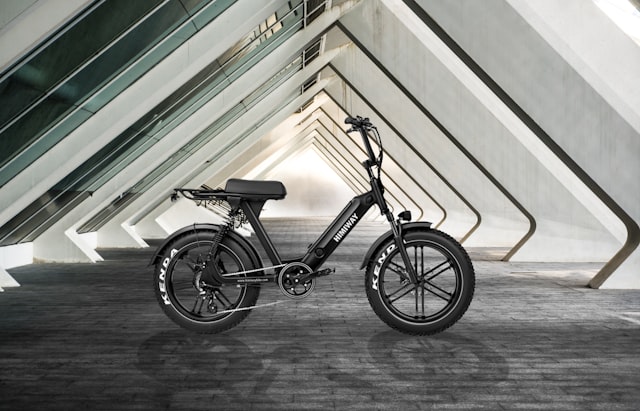
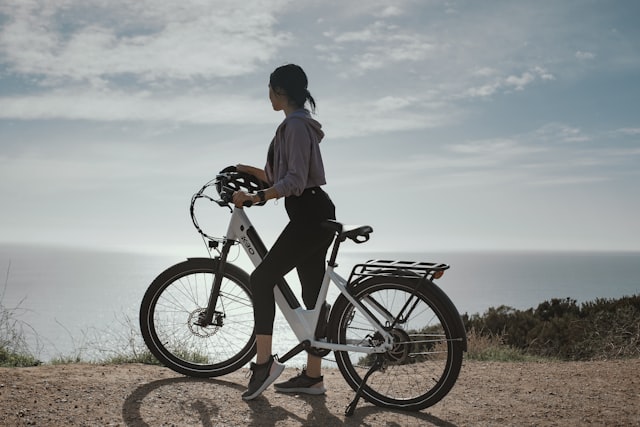
Let us be straight about this price band: there are very few e-bikes that sit reliably under $500, and the ones that do are entry-level machines with 36V batteries, 250W to 350W motors, mechanical disc brakes and components that will need adjustment out of the box. Several of the bikes below normally sit a little above the band and dip into it on sale, so treat this as a list of the bikes worth watching rather than a list of bikes that are always this cheap.
That said, a cheap e-bike that fits the job is not a bad purchase. For a flat campus, a short neighborhood loop, or a first bike to see whether you will actually ride, a 36V hub-motor bike does what it needs to. What it will not do is climb real hills, carry a heavy rider comfortably, or go 30 miles. Read the corners-cut section before you buy, and budget an hour and a set of hex keys for setup.
What gets cut at this price
Everything on a sub-$500 e-bike is chosen to hit the number. The battery is a small 36V pack, often 7 to 10Ah, which means 15 to 25 miles at moderate assist and less on throttle. The motor is 250W to 350W, fine on flat ground and a struggle on hills or with a 220 lb rider. Brakes are mechanical discs with basic pads; they work, but they need adjustment as the cables stretch in the first month.
Wheels are the thing to inspect first. Cheap wheels are machine-built with inconsistent spoke tension, and an e-bike puts more load through the rear wheel than a regular bike. Squeeze spoke pairs before the first ride and again after a week; a shop wheel true is money well spent. Connectors and cable routing are the second thing: make sure plugs are fully seated and nothing rubs the tire.
Support is the last corner. Most of these brands answer email and ship parts; none has a dealer network. If that bothers you, the next band up includes Lectric and Ride1Up, which have much larger owner communities and parts supply.
Battery safety on cheap e-bikes
The main safety concern with budget e-bikes is the battery and charger. Look for any certification mark (UL 2849 for the system or UL 2271 for the pack) and treat its absence as a reason to be careful rather than a dealbreaker. Charge on a hard surface away from exits, unplug when full, and never charge a pack that is hot, swollen or smells burnt; if you see any of that, stop using it and get an E-Bike Assessment or a professional opinion.
Use the charger that came with the bike. Swapping in a cheaper or higher-current charger because the original failed is how budget bikes end up as news stories. If a replacement is needed, match voltage, amperage and plug exactly; our replacement charger guide walks through it.
When to spend a little more
If you weigh over 200 lb, ride any real hills, or plan to go more than 10 miles at a time, the jump to a 48V bike in the under-$1,000 band is worth it. The Lectric XP 3.0 and Ride1Up Portola add hydraulic brakes, a 500W to 750W motor and a bigger battery, and they arrive assembled. Those two bikes alone make the strongest argument against buying in this band.
If your use really is short and flat, a cheap bike is fine, and keeping it cheap leaves money for a good lock and a helmet, which you will need either way.
Alternatives and who should skip this category
A used e-bike from a known brand is often a better buy than a new bike at this price, provided the battery is healthy and the seller will let you test ride. A quality regular bike in this band will also outlast any of these if you do not actually need the motor. And if you are buying for a teen, the Gotrax F2 and Lectric XP Lite 2.0 (the latter in the next band up) are more appropriate than a full-size 26-inch bike.
Already own an e-bike that is acting up?
Before replacing it, find out what is actually wrong. An E-Bike Assessment gives you a clear report and next steps.