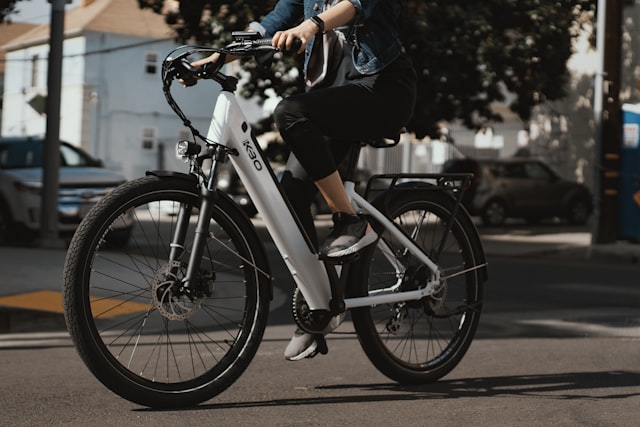
Commuter E-BikesFeatured
Aventon Level.2 Commuter E-Bike
Best for: Daily pavement commuting · Riders who want natural-feeling pedal assist · Anyone who wants fenders, rack and lights out of the box
View details & where to buy
Sold on Amazon
Comparison · updated 2026-08-22
The three-class system used by Texas and most other states sorts e-bikes by how the motor helps and how fast it helps. Class 1 is pedal-assist only, with assistance ending at 20 mph. Class 2 adds a throttle that can move the bike without pedaling, also capped at 20 mph. Class 3 is pedal-assist to 28 mph, and in Texas it is not supposed to have a throttle that works without pedaling. All three are limited to motors of 750 watts or less. Texas Transportation Code chapter 664 defines these classes; local rules about where each class may ride can vary, so always check the city or trail manager.
This page compares Class 2 and Class 3 directly because those are the two choices most shoppers are weighing: the throttle-equipped 20 mph bike that dominates Amazon and direct-to-consumer sales, versus the faster commuter. Class 1 gets its due throughout, since it is the most universally allowed on trails and the default for most dealer mid-drives. Many bikes sold today can be switched between classes in the display settings, which is convenient but puts the responsibility for riding legally on you.
A
Pedal assist plus a throttle, both limited to 20 mph. The most common class among hub-motor bikes from Aventon, Lectric, Rad Power, Heybike and similar brands. Easy for beginners, welcome on most paths, and gentle on legs.
B
Pedal assist up to 28 mph, no throttle-only operation. Built for road commuting and keeping pace with suburban traffic. More restrictions on trails and paths, and Texas requires riders to be at least 15 years old for Class 3.
| Criterion | Class 2 (throttle, 20 mph) | Class 3 (pedal assist, 28 mph) |
|---|---|---|
| Top assisted speed | 20 mph, after which the motor stops helping (you can pedal faster unassisted). | 28 mph under pedal assist. |
| Throttle | Yes, up to 20 mph without pedaling. | No throttle-only operation under the Texas definition. Some bikes sold as Class 3 include a throttle limited to 20 mph; legal status of that setup varies, so check local rules. |
| Where you can ride | Generally allowed wherever bikes are, including most multi-use trails, though cities and park agencies can restrict throttles on specific paths. | More often excluded from multi-use trails and bike paths. Intended for roads and bike lanes. Check the trail manager. |
| Minimum age in Texas | No state minimum; parents and local rules decide. | Texas requires the rider to be at least 15 years old. |
| Helmets | No statewide requirement for adults; some cities require them for minors. | Same statewide picture; helmets are strongly advisable at 28 mph regardless of the law. |
| Commute time | Fine for short to medium commutes. On 40–45 mph arterials like Preston Road or Eldorado Parkway you will still feel slow relative to cars. | Noticeably quicker on longer road commutes; keeps pace better with traffic in 30 mph zones. |
| Range | Better range at 20 mph; aerodynamic drag is modest. | Range drops sharply at 25–28 mph because wind resistance climbs with the square of speed. |
| Brakes and tires | Mechanical discs are acceptable on lighter bikes; hydraulics preferred on heavy ones. | Hydraulic disc brakes and e-bike rated tires are close to mandatory at these speeds. |
| Typical rider | Neighborhood riders, new riders, anyone with joint issues, teens (subject to local rules), errand runners. | Experienced road commuters, fitness riders who want to go fast, riders replacing car trips on surface streets. |
| Where Class 1 fits | Class 1 is Class 2 without the throttle; it is the most widely accepted on trails and the norm for dealer mid-drives. | Class 1 riders who want more speed often look at Class 3; many premium bikes offer a Class 1 or Class 3 version of the same frame. |
Advertisement
Pick Class 2 if you are new to e-bikes, want the safety valve of a throttle for tired legs or awkward starts, ride mostly on trails and neighborhood streets, or are buying for a teen (after checking your city's rules). It is the most flexible choice in North Texas and the one least likely to get you a lecture from a trail ranger. Pick Class 1 instead if you will ride a lot of multi-use paths and do not care about the throttle; it is accepted nearly everywhere bikes are.
Pick Class 3 if you commute on roads, want to keep up with suburban traffic, and are an experienced rider who will buy the helmet, lights and brakes that 28 mph deserves. Check whether your preferred routes allow it and expect to slow to trail speeds on shared paths. Whatever class you buy, if a display setting lets you unlock a higher speed, understand that doing so may change your bike's legal status. And if your bike's speed limiter behaves oddly or assist cuts out, the E-Bike Assessment can help you figure out why.
Best for: Daily pavement commuting · Riders who want natural-feeling pedal assist · Anyone who wants fenders, rack and lights out of the box
Sold on Amazon
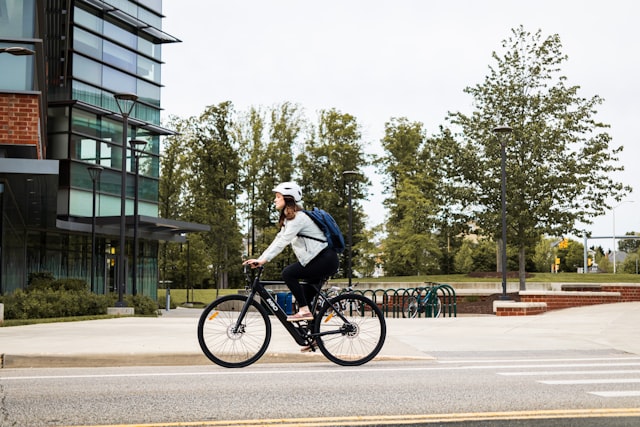
Best for: Faster suburban commutes · Riders who want fenders, rack and lights included · Value-focused buyers
Sold on Amazon
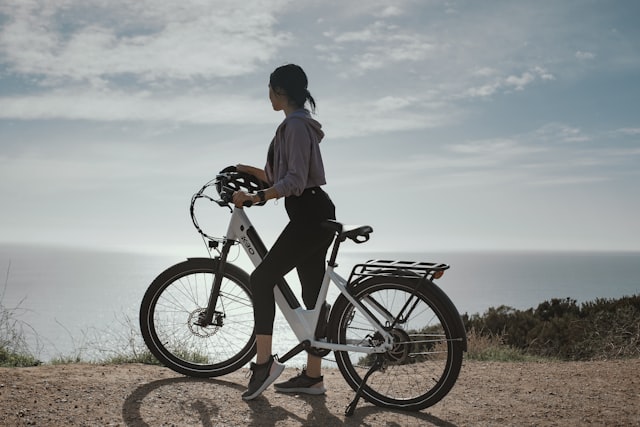
Best for: Riders who commute daily and want the best ride feel · Anyone who wants local dealer service · Longer and hillier commutes
Sold on Amazon
Best for: Replacing a dead thumb throttle on a Julet-connector kit · Riders who prefer a thumb paddle to a twist grip · Bikes running KT and similar controllers with waterproof harnesses
Sold on Amazon
It depends on the trail and the city's rules, which change. Many multi-use trails in the region allow Class 1 and 2 e-bikes at posted speeds and restrict Class 3. Check the city parks department or the trail manager before riding, and ride at a speed that matches the path no matter what class your bike is.
Texas law classifies the bike by how it actually operates, and many manufacturers ship bikes that can be reconfigured. If you set a bike to assist to 28 mph, treat it as a Class 3 bike, including the 15-and-over rule. Changing the settings may also affect your warranty and any insurance claims.
As of the laws we are aware of, Texas does not require a driver's license, registration or insurance for Class 1, 2 or 3 e-bikes with motors of 750W or less. Rules differ for anything faster or more powerful. Verify with current state and city sources.
Class 1 or Class 2, and Texas sets a minimum age of 15 for Class 3. Some cities and school districts have their own rules, and many parents limit teens to pedal-assist-only at lower settings. A helmet is a good idea at any age.
Yes. Texas caps all three classes at 750 watts. Anything above 750W, or any bike capable of motor-only speed above 20 mph, falls outside the e-bike definition and may be treated as a moped or motor vehicle.