Frisco E-Bike

Buyer guide · updated 2026-08-22

Best Commuter E-Bikes

A commuter e-bike has one job: get you to work, campus or the train and back, every day, without drama. That means the interesting specs are not peak watts or top speed. They are whether the fenders, rack and lights are already on the bike, whether the brakes are hydraulic, how the assist feels at stop signs, and whether somebody will fix it when a connector corrodes. Most of the bikes below share a formula (a 500W to 750W rear hub motor, a 48V battery in the 670 to 720Wh range, 26 or 27.5-inch wheels) and the differences come down to sensor type, finish and support.

We lean toward bikes that ship complete, because the add-ons are where budget commuters quietly get expensive, and toward brands with a service path that is more than an email address. We also include one dealer-sold premium bike so you can see what the extra money buys. The under-$1,500 band is where most people should shop; the $1,500 to $2,500 band buys a torque sensor, better finish and dealer support; above that you are paying for a mid-drive motor and proper frame sizing.

Affiliate Disclosure: We may earn a commission when you purchase through links on this page, at no additional cost to you. As an Amazon Associate I earn from qualifying purchases. Learn more

Our picks at a glance

  1. Best overall

    Aventon Level.2 Commuter E-Bike

  2. Best value

    Ride1Up 700 Series Commuter E-Bike

  3. Best for accessory-heavy setups

    Rad Power Bikes RadCity 5 Plus Commuter E-Bike

  4. Best for first-time commuters

    Velotric Discover 1 Step-Through E-Bike

  5. Best low-maintenance commuter

    Priority Current Belt-Drive Commuter E-Bike

  6. Best premium pick (usually dealer-sold)

    Specialized Turbo Vado 4.0 Commuter E-Bike

How we picked

We judge commuter bikes on the ride you actually take: 5 to 15 miles each way on pavement and bike paths, in traffic, in all weather, with a bag. Fit for purpose weighs upright-but-efficient geometry, commuter tires and a sensor that makes low assist levels usable in stop-and-go riding. Features counts hydraulic brakes, integrated lights, fenders and a rack that is rated for panniers. Serviceability is scored by whether a local shop will touch the bike and how easy spare parts are to get.

Range is scored for a bike carrying a rider and a bag at Class 2 speeds, not the optimistic low-assist figure. Weight matters more for commuters than most categories because many of them live in apartments or on car racks, so lighter scores higher. Value compares what is in the box at each price band.

PickFit for purposeValueFeaturesServiceabilityRangeSize and fitWeight
Aventon Level.2 Commuter E-Bike5/54/55/54/53/54/52/5
Ride1Up 700 Series Commuter E-Bike5/55/54/53/54/54/52/5
Rad Power Bikes RadCity 5 Plus Commuter E-Bike4/53/54/54/53/54/52/5
Velotric Discover 1 Step-Through E-Bike4/54/54/53/54/54/52/5
Priority Current Belt-Drive Commuter E-Bike4/53/54/53/53/53/53/5
Specialized Turbo Vado 4.0 Commuter E-Bike5/52/55/55/54/55/53/5
  • Fit for purpose: How well the bike suits the job this guide is about, judged on geometry, tires, motor tuning and the equipment it ships with.
  • Value: What you get for the price band, counting what is included versus what you will have to add (fenders, rack, lights, larger battery).
  • Features: Brakes, sensor type, suspension, lights, fenders, rack, display and app features, weighted by how much they matter for this use.
  • Serviceability: How easy it is to get parts, warranty help and local shop service. Dealer brands score high; email-only brands score low.
  • Range: Battery capacity relative to the bike's weight, tires and typical use. We score usable real-world range, not the brochure number.
  • Size and fit: Frame sizes offered, standover height, reach and how far the seatpost and stem adjust across rider heights.
  • Weight: Overall bike weight and what it means for handling, stairs, car racks and pedaling home with a dead battery. Lighter scores higher.
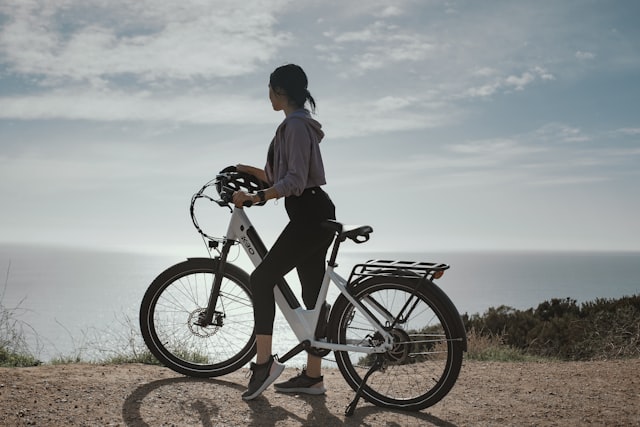
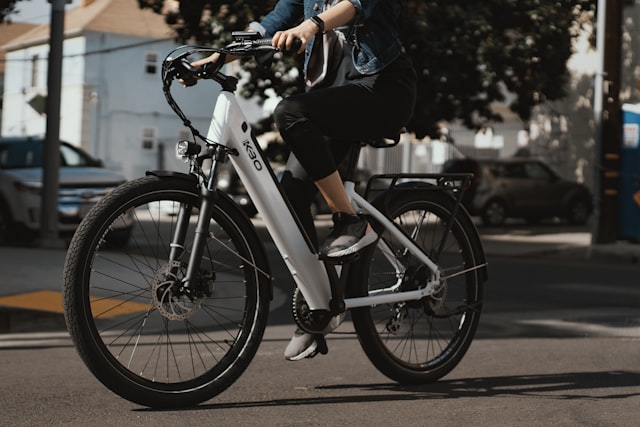
Rider on a white and black electric bike

1. Best overall

Aventon Level.2 Commuter E-Bike

The Level.2 is the commuter we recommend first because the torque sensor makes assist feel like strong legs rather than a switch, and it ships with fenders, rack, integrated lights and hydraulic brakes. It is heavy and the 672Wh battery is average, but for a typical suburban commute that is not a problem. Aventon's dealer network means warranty work does not start with an email.

Pros

  • Torque sensor makes assist feel smooth
  • Hydraulic disc brakes standard
  • Complete commuter kit included

Considerations

  • Heavy for stairs or car racks
  • Battery is not the largest in class
  • Ride is firm with the stock suspension fork
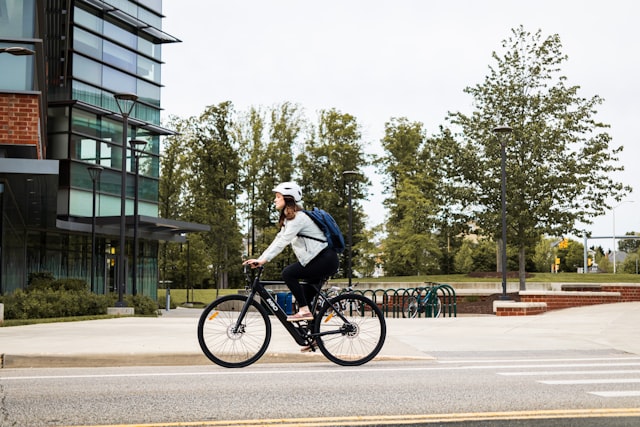
Rider on an electric bicycle on a paved road

2. Best value

Ride1Up 700 Series Commuter E-Bike

The 700 Series puts a 750W motor, a 720Wh battery, hydraulic brakes, a suspension fork, fenders, rack and lights into a bike that usually sits in the under-$1,500 band. It reaches Class 3 speeds for longer suburban commutes. The cadence sensor feels more on/off than the Level.2 and support is online only, which is why it sits second rather than first.

Pros

  • Strong 750W motor and 720Wh battery
  • Hydraulic brakes
  • Complete commuter kit

Considerations

  • Assist feel is less refined
  • Heavy to lift
  • No dealer network
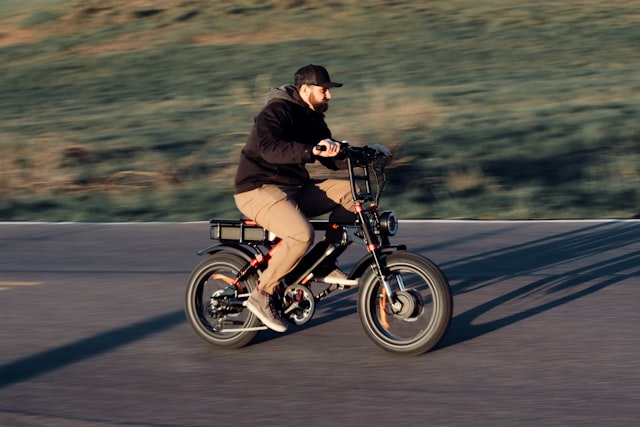
Man riding an e-bike down a street

3. Best for accessory-heavy setups

Rad Power Bikes RadCity 5 Plus Commuter E-Bike

The RadCity 5 Plus is the bike for people who will add a front rack, a trunk bag, a child seat and a second set of panniers, because Rad's accessory catalog and fit documentation are the best in the direct-to-consumer world. It is comfortable and stable in high-step and step-through frames. It costs more than rivals with the same spec sheet and uses a cadence sensor.

Pros

  • Complete commuter kit
  • Hydraulic brakes
  • Two frame styles

Considerations

  • Heavy
  • Less refined assist
  • Mid-size battery
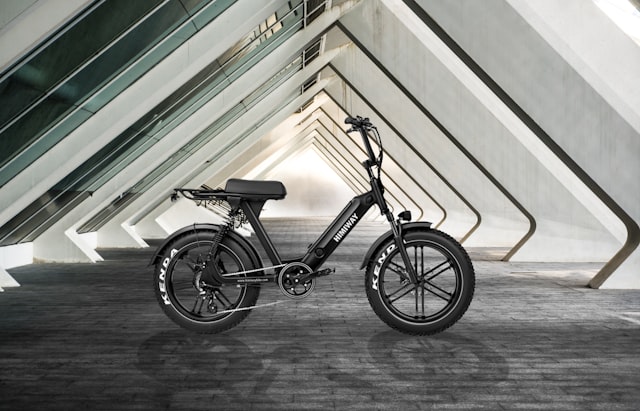
Electric bicycle on a concrete floor

4. Best for first-time commuters

Velotric Discover 1 Step-Through E-Bike

The Discover 1 is the easiest first e-bike to live with: UL-certified electrical system, a 440 lb payload rating, a full commuter kit and a comfortable upright position in step-through or high-step frames. The 692Wh battery is generous for the price band. The cadence sensor and weight are the trade-offs, and support is direct with a few partner shops.

Pros

  • UL-certified electrical system
  • 440 lb payload
  • Full commuter kit included

Considerations

  • Assist feels less natural than torque-sensor bikes
  • Heavy
  • Suspension fork is basic
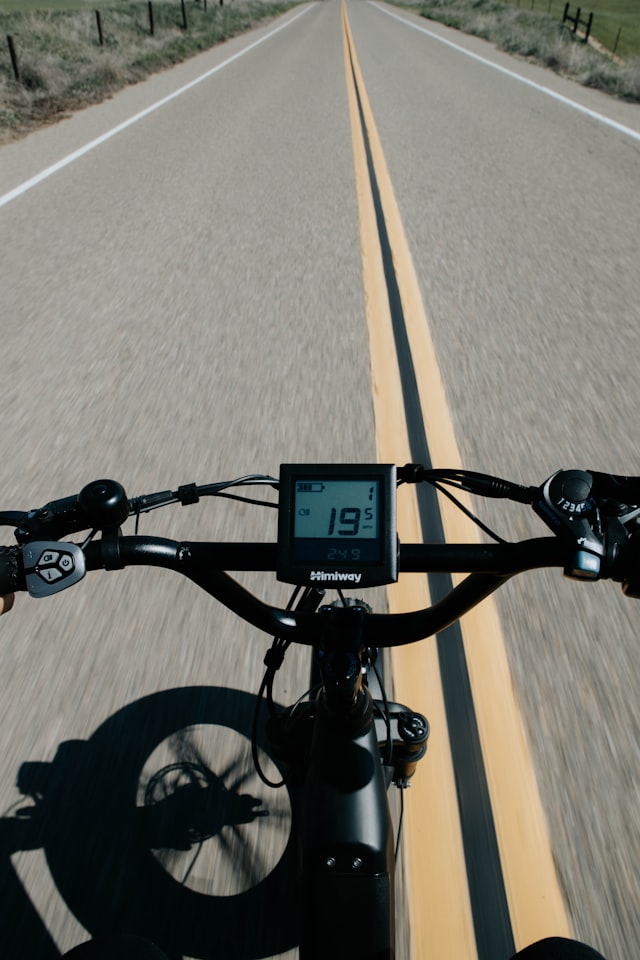
Electric bike handlebar and display detail

5. Best low-maintenance commuter

Priority Current Belt-Drive Commuter E-Bike

The Current pairs a 500W mid-drive with a Gates belt and an internally geared hub, so there is no chain to lube and no derailleur to bend. It has a torque sensor, hydraulic brakes, fenders and lights, and it reaches Class 3 speeds. It is sold direct and through select shops rather than on Amazon, and it costs more than hub-motor commuters, but daily all-weather riders get that money back in time not spent on upkeep.

Pros

  • Belt drive and internal gearing
  • Torque-sensing mid-drive
  • Hydraulic brakes and lights

Considerations

  • Expensive
  • Not an Amazon item
  • Fewer shops familiar with the system
Rider on an electric bicycle

6. Best premium pick (usually dealer-sold)

Specialized Turbo Vado 4.0 Commuter E-Bike

The Turbo Vado 4.0 is the benchmark: a quiet mid-drive, a 710Wh integrated battery, Class 3 speed, a full kit and a frame that comes in real sizes. It is sold through Specialized dealers, not Amazon, and it costs well into the premium band. We include it so you can see what the extra money buys, and because riders with long, hilly commutes who want local service should at least test ride one.

Pros

  • Refined mid-drive
  • Large integrated battery
  • Full commuter kit and real sizing

Considerations

  • Expensive
  • Not sold on Amazon in the usual sense
  • Proprietary parts

Affiliate Disclosure: We may earn a commission when you purchase through links on this page, at no additional cost to you. Details

Advertisement

Torque sensor or cadence sensor: the thing you will notice every ride

A cadence sensor turns the motor on when the cranks turn and off when they stop, at a level you set on the display. A torque sensor measures how hard you are pushing and scales assist to match. On a commute with a lot of stops, the difference is real: cadence bikes tend to lurch when you start pedaling and keep pushing a beat after you stop, while torque bikes feel like a normal bike with stronger legs. Neither is unsafe once you are used to it, but if you can, ride both before you buy.

Torque sensors used to be a premium feature. They are now on bikes in the under-$1,500 band (Heybike Mars 2.0, Lectric XPeak 2.0) and standard on Aventon's lineup. Cadence-sensor bikes like the Ride1Up 700 Series and Velotric Discover 1 are still excellent commuters and usually cost less for the same hardware. If your route is mostly open bike path, a cadence sensor is fine; if it is downtown stop-and-go, the torque sensor is worth paying for.

What a complete commuter kit should include

Fenders, a rear rack, integrated lights and hydraulic disc brakes are the four things that separate a commuter from a bike that will become a commuter after you spend another few hundred dollars. Fenders matter more than people expect in North Texas because the rain comes in bursts and the roads stay wet for an hour. A rack rated for 55 lb or more lets you move your bag off your back, which is the single biggest comfort upgrade in commuting.

Integrated lights that run off the main battery are better than clip-on lights because they are always there and always charged. Check that the headlight is actually bright enough to see by, not just to be seen; many stock headlights are the latter, and a better headlight is a worthwhile upgrade. Hydraulic brakes matter because commuter e-bikes weigh 55 to 70 lb and you will be stopping from 20 mph next to cars.

A suspension fork is a nice-to-have, not a need, on pavement. The basic forks on most commuters add weight and a little comfort over expansion joints; a suspension seatpost does nearly as much for less weight and cost.

Class 2 versus Class 3 and where you ride

Texas defines e-bike classes 1 through 3 (Transportation Code chapter 664). Class 2 bikes have a throttle and assist to 20 mph; Class 3 bikes assist to 28 mph. Several bikes here ship as Class 2 and can be unlocked to Class 3 in the display or app. For a commute on roads and bike lanes that extra speed is useful; on shared-use trails and greenbelts many cities and park systems limit e-bikes to Class 1 or 2, so check local rules before you count on 28 mph.

Faster also means shorter range and harder braking. If your commute is mostly trail, a Class 2 bike with a good torque sensor will be more pleasant than a Class 3 bike you have to hold back. If it is 12 miles of suburban arterials, Class 3 capability is worth having.

Weight, storage and charging at work

Most of the bikes here weigh between 55 and 70 lb. That is fine in a garage and annoying in a third-floor walk-up. If you live upstairs, look at the lightweight picks in our college student guide (Aventon Soltera.2, Ride1Up Roadster V2, Velotric T1) or accept that the bike lives downstairs with a good lock. Car racks need a real e-bike weight rating; many hanging racks are rated for 35 lb per bike.

A removable battery lets you charge at your desk and store the pack indoors in summer, which matters for battery life in Texas heat. Bikes with integrated batteries (Schwinn Coston CE, Velotric T1, the dealer bikes) need an outlet where the bike parks. Either way, plan on charging indoors and never in direct sun.

Alternatives and who should skip this category

If your commute is under five miles and flat, a lightweight bike like the Aventon Soltera.2 or Ride1Up Roadster V2 will be more pleasant to own than a 65 lb commuter. If it is mostly rough chip-seal or gravel shoulder, a wide-tire hybrid like the Ride1Up Turris or a fat-tire bike may suit better. If you need to carry a child or a week of groceries, skip straight to the cargo guide. And if you want a Bosch or Specialized mid-drive with local service, accept that you are shopping at a dealer, not on Amazon.

Already own an e-bike that is acting up?

Before replacing it, find out what is actually wrong. An E-Bike Assessment gives you a clear report and next steps.
Frequently asked questions

How much range do I really need for commuting?

Take your round-trip distance, add 30 percent for headwinds, summer heat and detours, and make sure the bike covers that at the assist level you will actually use. A 670 to 720Wh battery on a commuter bike typically covers 25 to 40 miles of mixed assist, which is enough for most commutes with charge to spare.

Do I need a torque sensor?

No, but you will probably prefer one if your route has many stops. Cadence-sensor bikes cost less for the same hardware and work well on open paths. If you can test ride both, do.

Is a 750W motor overkill for commuting?

Not for a heavier rider, a hilly route or anyone who wants Class 3 speed. On flat ground a 500W motor with a torque sensor is plenty, and a 350W lightweight bike is fine for short, flat commutes.

Should I buy a commuter e-bike on Amazon or from a shop?

Both can work. Amazon and direct brands win on price and selection; a shop wins on fit, setup and warranty service. If you buy online, budget for a shop tune after assembly and find out in advance which local shops will service direct-to-consumer bikes.

What about theft?

A commuter bike that parks outside needs a U-lock or folding lock rated for e-bikes, a removable battery you take with you, and ideally a hidden tracker. See our lock guide for specifics.