Frisco E-Bike

Troubleshooting · updated 2026-08-22

E-Bike Brake Rubbing

  • Constant shh-shh sound that speeds up with the wheel
  • Scraping or ringing once per wheel revolution
  • Brake drags and the bike feels slow or the battery drains faster
  • Rubbing started after removing the wheel, fixing a flat, or a crash
  • One pad wears much faster than the other

Disc brake rub is the most common e-bike complaint and one of the most fixable. The pads sit a fraction of a millimeter off the rotor, so anything that moves the caliper, the rotor or the wheel shows up as noise: a caliper bolted on slightly crooked, a rotor with a tiny bend, a wheel not fully seated in the dropouts after a flat, or pads that are worn and contaminated.

Once-per-revolution scraping is almost always a rotor issue. Constant rub is almost always caliper alignment or a wheel not seated. Work through it in that order and you will fix most cases with a hex key and five minutes. Hydraulic brake internals and torque-sensitive thru-axles are where home fixes stop.

Safety first

Never open a battery pack. Stop immediately if you see swelling, smell burning, or feel heat at the battery or connectors. Do not cut or splice wires. Unplug the battery before touching connectors. When in doubt, stop and get an E-Bike Assessment.

Possible causes

  1. Cause 1

    Wheel not fully seated in the dropouts

    After a flat or a transport, a wheel that is not pushed all the way into the dropouts sits at a slight angle, and the rotor rubs one pad. Rear hub-motor wheels are heavy and have a torque washer that must sit correctly, so this is very common. Loose axle nuts also let the wheel shift.

    Safe checks

    • With the bike on the ground, loosen the axle nuts or quick release, press the wheel firmly and evenly into the dropouts, then retighten — hub-motor axle nuts need to be properly tight (manufacturer spec is often 35–45 Nm; use a torque wrench if you have one).
    • Confirm the torque washer on a hub motor is seated in the dropout slot and has not rotated.
    • Spin the wheel and listen; rub that changes after reseating was a seating problem.

    Related parts: Torque Wrenches, Multi-Tools

  2. Cause 2

    Caliper misaligned over the rotor

    The caliper is held by two bolts with a bit of side-to-side slack. If it is bolted down off-center, one pad drags. A small bump, a rack install, or simply the rub of a bent rotor can shift it. The standard realignment takes a minute.

    Safe checks

    • Loosen the two caliper mounting bolts a half turn so the caliper can float, squeeze the brake lever firmly to center the caliper on the rotor, hold the lever, and retighten the bolts evenly (check the torque printed on the caliper, often 6–8 Nm).
    • Spin the wheel; if rub persists, sight through the caliper from above and nudge it so the rotor sits centered between the pads, then retighten.
    • If the caliper will not center, check for a washer or mount adapter that is missing or stacked wrong.

    Related parts: Brake Tools, Torque Wrenches, Multi-Tools

  3. Cause 3

    Bent or warped rotor

    A rotor bent by leaning the bike, a rack strap, or a hot descent scrapes once per revolution. Small bends can be trued with a rotor truing fork; large bends or a blued, heat-warped rotor should be replaced. Never true a rotor with an adjustable wrench or pliers without protecting the surface.

    Safe checks

    • Spin the wheel and watch the rotor through the caliper; a wobble that touches a pad at one spot is a bend.
    • Mark the high spot, then use a rotor truing tool to make small bends in the opposite direction, checking after each.
    • If the rotor is blue, scored, or thinner than the minimum printed on it (often 1.5 mm), replace it.

    Related parts: Brake Rotors, Brake Tools

  4. Cause 4

    Worn, glazed or contaminated pads

    E-bikes are heavier and faster, so pads wear fast. Pads down to the backing plate, or pads contaminated by chain lube or brake fluid, rub, squeal and stop poorly. A pad that has worn unevenly because of misalignment will keep rubbing even after you fix the alignment.

    Safe checks

    • Look at pad thickness through the caliper — less than about 1 mm of material means replace.
    • Check for a shiny glazed surface or oily residue on pads and rotor.
    • Replace pads in pairs with the correct shape for your caliper model and an e-bike-appropriate compound.

    Related parts: E-Bike Brake Pads, Brake Tools, Degreasers

  5. Cause 5

    Hydraulic piston not retracting

    Hydraulic calipers have pistons that should return slightly after braking. A dirty or sticky piston stays out and the pad drags. Squeezing the lever with the wheel out (and no pad spacer) pushes pistons too far and causes the same symptom. Cleaning and resetting pistons is a careful job; if there is any leak, stop.

    Safe checks

    • With the wheel in, look at the pad gap on each side; one pad hard against the rotor and the other well away suggests a sticky piston.
    • Remove the wheel and pads, gently push the pistons back with a plastic tire lever or pad spreader, reinstall and recenter.
    • Look for any wet fluid around the caliper or hose — a leak means professional service.

    Related parts: Hydraulic Brake Components, Brake Tools

  6. Cause 6

    Mechanical brake cable or pad adjustment off

    Cable disc brakes have one fixed and one moving pad with a small adjuster for each. Cable stretch, a barrel adjuster turned too far, or a fixed-pad adjuster screwed in too close makes the pad drag. This is an easy fix.

    Safe checks

    • Back off the barrel adjuster at the lever or caliper a turn and check for clearance.
    • Turn the fixed-pad adjuster dial or screw out slightly until the inboard pad clears, then recenter the caliper.
    • Check the cable for fraying and the arm for free return.

    Related parts: E-Bike Brake Pads, Brake Levers, Multi-Tools

Safe basic checks, in order

  1. 1

    Identify the pattern

    Constant rub points to caliper or wheel seating. Once-per-revolution points to rotor. Rub after a wheel removal points to seating or piston.

  2. 2

    Reseat the wheel

    Loosen axle, press wheel fully into dropouts, check the torque washer on hub motors, retighten to spec.

  3. 3

    Center the caliper

    Loosen both caliper bolts half a turn, squeeze the lever, retighten evenly while holding. Spin and listen.

  4. 4

    Check rotor true

    Spin the wheel and watch the rotor through the caliper. True small bends with a proper tool; replace scored or heat-damaged rotors.

  5. 5

    Inspect pads

    Thickness, glazing, contamination. Replace in pairs with the correct shape.

  6. 6

    Reset pistons (hydraulic) or adjust pad (mechanical)

    Push pistons back evenly with pads out, or back off the fixed-pad adjuster on a cable brake. Recenter afterward.

  7. 7

    Test at walking speed

    Ride slowly, brake firmly a few times, then coast and listen. Bed in new pads with a dozen moderate stops.

When to stop troubleshooting

  • Brake fluid is visible on the caliper, hose or lever, or the lever pulls to the bar.
  • The rotor is cracked, blued, or below minimum thickness.
  • The caliper mount, adapter or bolts are stripped, or the axle will not tighten properly.
  • A hub-motor wheel will not seat squarely or the torque washer is damaged.
  • You are not confident setting axle torque — a loose motor axle can spin out under power.
  • If none of the safe checks above turn anything up, stop guessing and start an E-Bike Assessment at friscoebikerepair.com/assessment/ — describe the symptom, your bike, and what you have already checked, and you will get a clear next step instead of buying parts on a hunch.
Not sure what’s wrong? Get an E-Bike Assessment

Opens Frisco Ebike Repair$19.99 flat, report with likely causes and next steps.

Advertisement

Frequently asked questions

Is a little brake rub normal on an e-bike?

A faint occasional tick is common with thin rotors and tight pad clearance. A constant shh or a loud ring per revolution is not normal and is costing you range and pad life. Fix it.

Why did my brake start rubbing after I fixed a flat?

The wheel was not fully seated in the dropouts, or on a hydraulic brake the lever was squeezed with the wheel out and the pistons advanced. Reseat the wheel first; if that does not do it, reset the pistons and recenter.

Can I use WD-40 or lube to stop the squeal?

No. Anything oily on pads or rotors contaminates them permanently and ruins braking. Clean the rotor with isopropyl alcohol and, if pads are contaminated, replace them.

How tight should the rear axle nuts be on a hub motor?

Check your manual; many specify 35–45 Nm, far tighter than a normal bike axle. A torque wrench is worth owning. Too loose and the motor can torque itself out of the dropouts.

Which brake pads do I need?

Pads are shape-specific to the caliper model (Tektro, Shimano, Zoom, Logan and so on each have several shapes). Read the caliper body or your manual, and buy the matching shape in an e-bike-rated compound.

Parts that commonly fix this

Only order once you have confirmed the cause — mismatched electrical parts can damage a controller or battery.

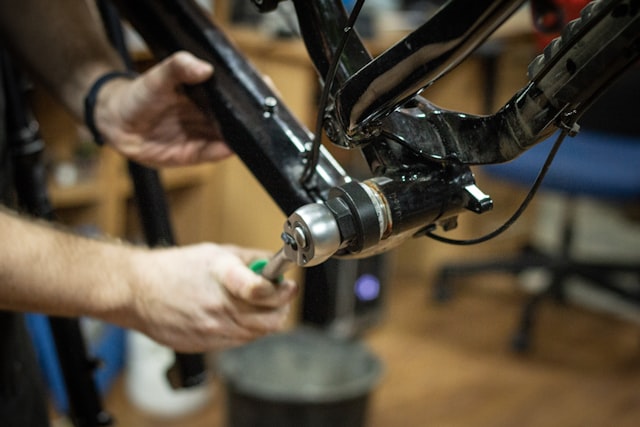
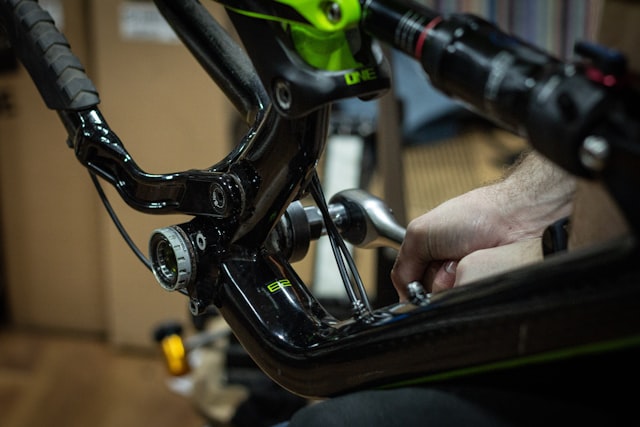
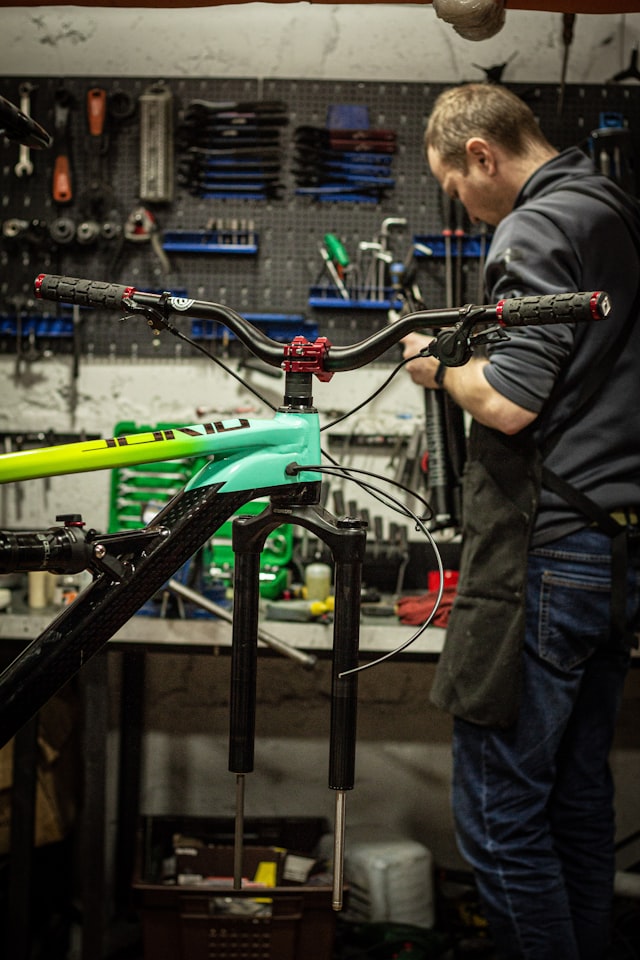
Mechanic repairing a bicycle
E-Bike Brake PadsFeatured

Tektro E10.11 Disc Brake Pads

Best for: E-bikes with Tektro HD-E350, HD-M275/M285/M290 style calipers and Aries/Novela mechanicals · Riders who want the OEM pad shape without guessing · Replacing worn resin pads at the first squeal