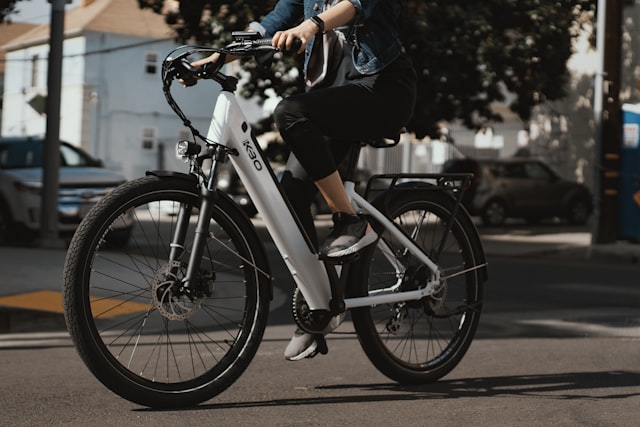
Commuter E-BikesFeatured
Aventon Level.2 Commuter E-Bike
Best for: Daily pavement commuting · Riders who want natural-feeling pedal assist · Anyone who wants fenders, rack and lights out of the box
View details & where to buy
Sold on Amazon
Comparison · updated 2026-08-22
Hub motors come in two internal designs. A geared hub has a small, fast-spinning motor inside the shell connected to the wheel through a planetary gear reduction, usually with nylon or composite gears and a freewheel clutch. A direct-drive hub is one big, slow-turning motor where the outer shell is the rotor; there are no gears, no clutch and no moving parts besides the bearings. Both are sold as replacement wheels and conversion kits and both appear on complete bikes, though geared hubs are far more common on consumer e-bikes today.
The trade is weight and punch versus silence and simplicity. Geared hubs are lighter, smaller and produce more torque from a stop, which is what most riders want. Direct-drive hubs are heavier and feel lazier off the line but are nearly silent, can run regenerative braking and have essentially nothing inside to wear out. Here is how that plays out for real riders.
A
Compact motor with an internal planetary reduction and freewheel clutch. Lighter, torquier at low speed and coasts freely. Gears make a faint whine and can wear over many years; most consumer e-bikes use this design.
B
Large gearless motor where the wheel is the rotor. Silent, extremely durable and capable of regenerative braking, but heavy, slower to accelerate and with noticeable drag when coasting unpowered.
| Criterion | Geared Hub Motor | Direct-Drive Hub Motor |
|---|---|---|
| Weight | Typically 6–9 lb for a 500–750W unit. | Typically 12–20 lb; feels like a heavy wheel because it is one. |
| Low-speed torque and hills | Strong off the line thanks to the gear reduction. Good on short, steep climbs. | Softer start; needs speed to make torque. Can overheat on long steep climbs at low speed. |
| Top speed efficiency | Efficient in the 10–25 mph band most riders use. | Efficient at higher sustained speeds; favored for fast, flat cruising. |
| Noise | Faint gear whine, more noticeable on cheap units or as gears wear. | Nearly silent. |
| Coasting and pedaling unpowered | Freewheel clutch lets the wheel spin freely; pedaling with the motor off feels like a normal heavy bike. | Magnetic cogging drag when unpowered; pedaling a dead bike home is noticeably harder. |
| Regenerative braking | Not possible with a freewheel clutch. | Possible; returns a small amount of energy and saves brake pads on long descents. Needs a controller that supports it. |
| Durability | Gears and clutch are wear items, though many last a decade. Replacement gear sets are inexpensive. | Nothing to wear but bearings. Very long service life. |
| Heat | Gears help the motor spin fast and stay cool at normal speeds; small units can overheat when lugged on long climbs. | Large mass sheds heat well at speed; struggles at sustained low-speed, high-load use. |
| Availability on consumer bikes | The default on nearly every mainstream brand: Aventon, Lectric, Rad Power, Heybike, Velotric and most Amazon bikes. | Mostly in conversion kits, some older models and a few fast commuter or cargo designs. |
Advertisement
Pick a geared hub if you are buying a complete e-bike or a conversion kit for typical use: stop-and-go riding, hills, carrying the bike, or any situation where weight matters. It is lighter, punchier and coasts freely, and the gear whine is minor on a decent unit. If you are choosing between two otherwise similar bikes, the geared hub is almost always the right default.
Pick a direct-drive hub if you ride long, flat, fast routes and prize silence and longevity, or if regenerative braking appeals to you for descents and pad savings. Accept the heavier wheel and the drag when the power is off. If your hub motor of either type has started grinding, clicking or cutting out, stop and look at our motor troubleshooting page; a grinding geared hub may need new gears, while a direct-drive that drags hard may have a controller or phase-wire fault, and an E-Bike Assessment can help you tell the difference.
Best for: Daily pavement commuting · Riders who want natural-feeling pedal assist · Anyone who wants fenders, rack and lights out of the box
Sold on Amazon
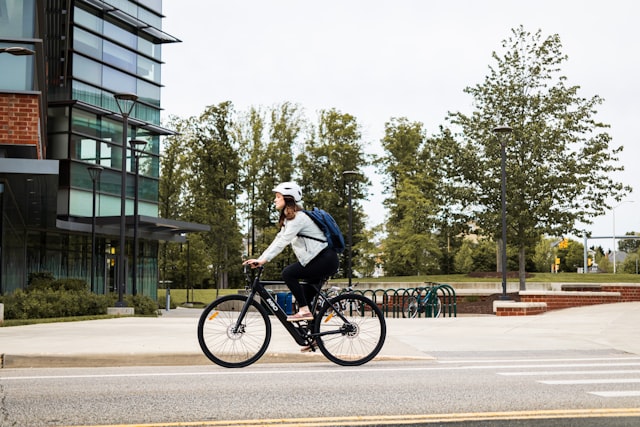
Best for: Faster suburban commutes · Riders who want fenders, rack and lights included · Value-focused buyers
Sold on Amazon
Best for: Replacing a dead controller on a KT-based conversion kit · Upgrading a noisy square wave controller to sine wave · Pairing with a KT LCD display
Sold on Amazon
Best for: Converting a rigid or hardtail bike with a standard 68–73 mm threaded bottom bracket · Hilly commutes where a hub motor struggles · Riders who want gear-assisted climbing rather than raw throttle power
Sold on Amazon
Lift the rear wheel with the bike off and spin it backward. A geared hub spins freely and silently; a direct-drive gives a pulsing, magnetic resistance (cogging). Size is a second clue: direct-drives are usually large, flat discs; geared hubs are compact cans.
The nylon planetary gears and the clutch are wear items, but on a well-made motor they often last many years of daily use. Symptoms of wear are a louder whine, a grinding or clicking under load, or slipping. Replacement gear sets are available for common motors and are a routine shop job.
It returns a modest amount of energy, usually a few percent of a ride's total, and its real value is saving brake pads on long descents and adding controllable drag. On the flat terrain around Frisco the range benefit is small. It is not a reason by itself to choose direct-drive.
That is cogging: the permanent magnets interact with the stator even with no power applied, creating drag at every rotation. It is normal for direct-drive motors and is the main reason geared hubs, with their freewheel clutch, are preferred for bikes that may be pedaled unpowered.
For stop-and-go riding and hills, a geared hub's low-speed torque helps more. For sustained flat cruising with heavy loads, a large direct-drive handles heat well. Many heavy-duty riders end up with a mid-drive instead; see our hub vs mid-drive comparison.