A new e-bike shows up with a charger, a dim headlight and not much else. The first month of ownership is when people discover what is missing: a lock that actually protects a bike worth more than a laptop, a helmet they will wear in July, a way to see the map without a phone sliding off the bars, and a pump that reads the low pressures fat tires run at. This guide is the short list we hand to people who just bought a bike and ask what to get next.
We kept the list to one solid pick per category rather than seven locks and nine lights. Each pick links to its own category page and, where we have written one, a deeper guide (locks, helmets, phone mounts, tire repair kits, chargers) so you can compare alternatives. The picks below favor commuters and neighborhood riders on hub-motor bikes, because that is most of the e-bikes sold around Frisco, Plano and McKinney.
One honest note: accessories add up fast, and the order matters. If the bike is parked outside anywhere, the lock comes first. If you ride before sunrise or after dark, lights move ahead of everything except the helmet. Everything else can wait until you know how you actually use the bike.
Buy in this order
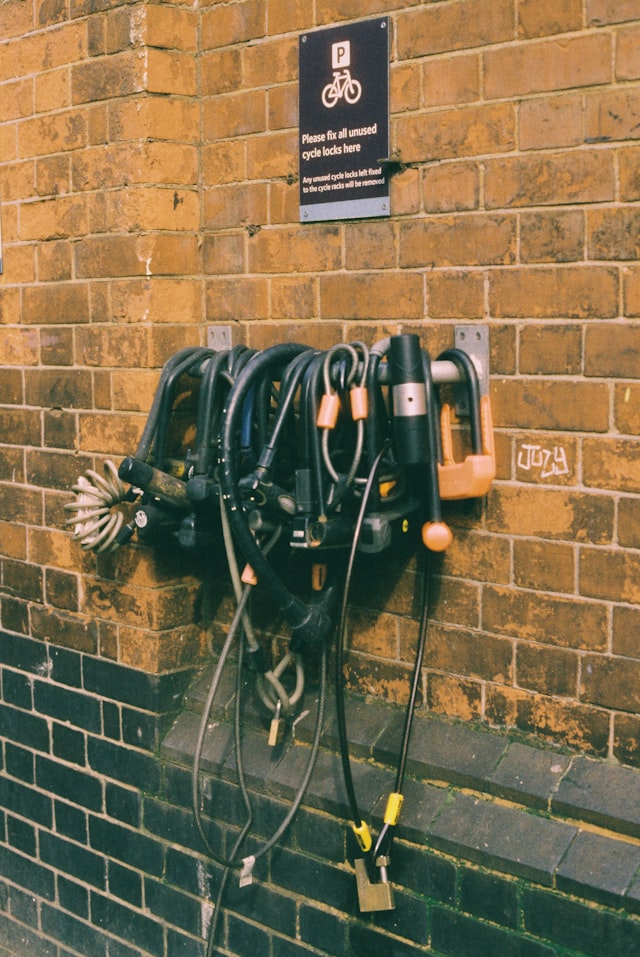
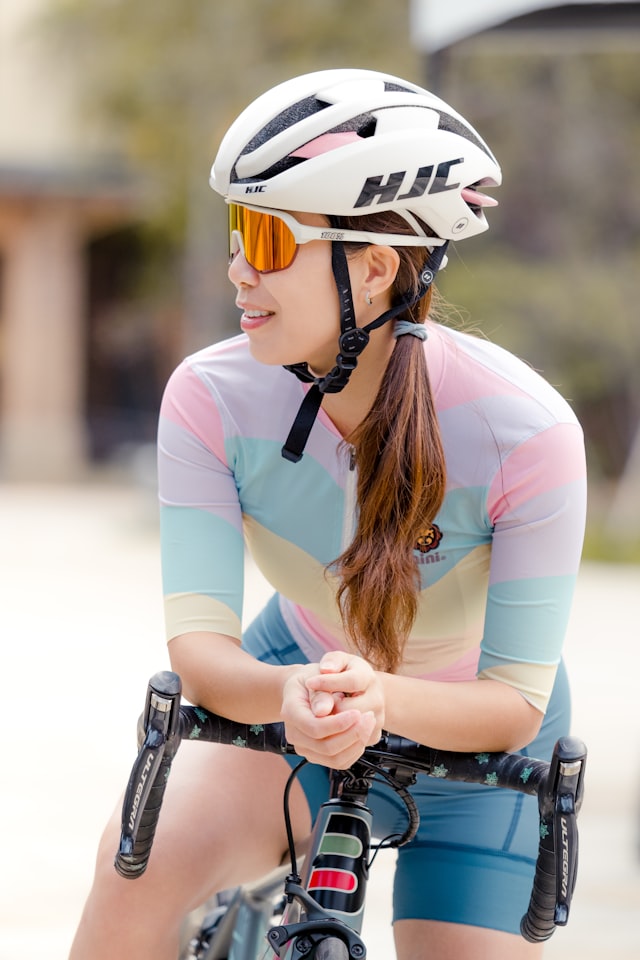
Lock and helmet first, lights second, everything else third. An e-bike is the most stealable thing most people own that is not a car, and the cable lock that came in the box is decoration. Pair a U-lock or strong folding lock with a cable or second lock for the front wheel, and register the bike's serial number with the manufacturer and your insurer.
Lights matter more on an e-bike than a regular bike because you cover ground faster and ride farther from home. The stock light on most budget bikes is a low-output unit wired to the battery; keep it, but add a USB headlight for unlit paths and a bright taillight with a daytime flash. Texas sun washes out dim taillights at noon.
After that, buy for how you actually ride. Commuters want panniers and fenders; neighborhood riders want a comfortable saddle and a bottle cage; anyone who has walked a flat home wants a patch kit, levers and a mini pump under the seat.
E-bikes break accessories that work fine on regular bikes
Three things trip people up. First, frame tubes on e-bikes are fat because the battery lives inside or on the downtube, so U-lock brackets, bottle cages and frame bags that clamp round tubes may not fit; folding locks and strap-on holsters are more forgiving. Second, hub-motor bikes vibrate more at the bars than mid-drives, and cheap clamp phone mounts and rubber-strap lights walk loose over a season. Third, rear axles are crowded with motor wiring and torque arms, so racks and kickstands need spacers and patience.
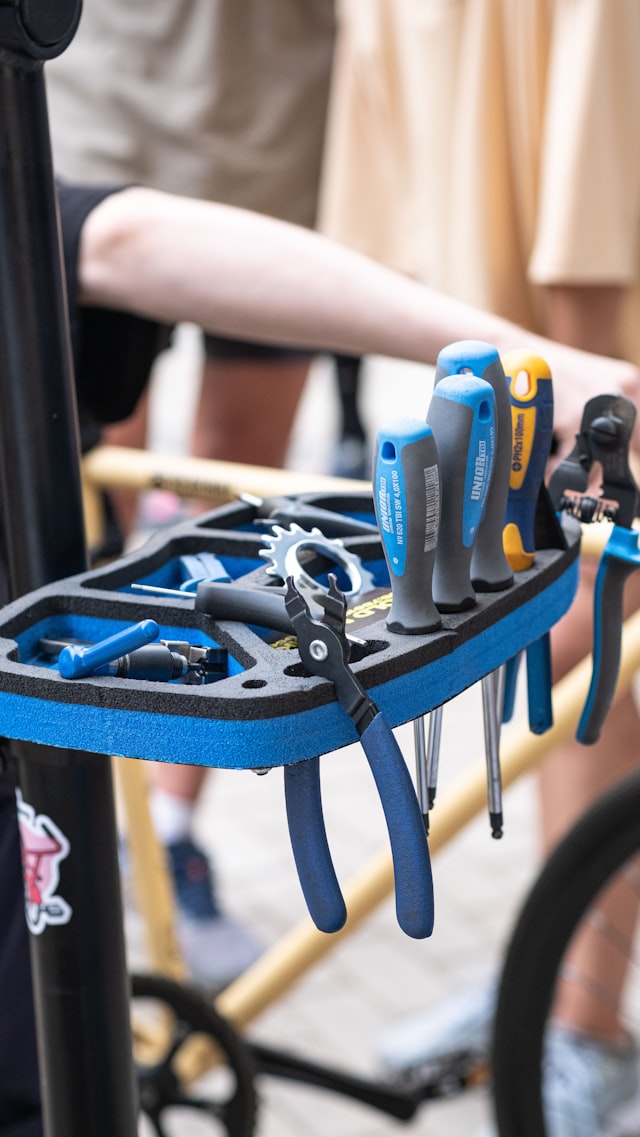
Weight is the other difference. A 60 to 80 lb bike is hard to lift onto a work stand, flip over for a flat, or carry up stairs, so accessories that let you avoid lifting earn their keep: a pump with a long hose, a plug kit for tubeless tires, a bead jack for stubborn fat tires, and a double-leg kickstand that holds the bike upright while you work.
Where the multimeter fits
A basic multimeter is the one tool that separates guessing from knowing when a bike will not charge or will not turn on. Set it to DC volts and measure at the charger plug and the battery's discharge port: a 36V pack should read about 42V full, 48V about 54.6V, 52V about 58.8V. A charger that reads zero or well below its label is dead; a pack that reads far below its nominal voltage has a problem the charger will not fix.
Stop there. If a check involves opening the battery case, a pack that is swollen or hot, a burnt smell, or cutting wires, put the meter down and start an E-Bike Assessment at friscoebikerepair.com/assessment/ instead. The meter is for the outside of the system.
What we skipped and why
We left out GPS trackers, alarms, mirrors, child seats and cameras not because they are bad but because they are situational; each has its own category page with picks. We also skipped suspension seatposts and comfort saddles here because they depend heavily on the bike and the rider; see the parts section for those.
Skip anything that claims to boost range or speed through an accessory. Range comes from battery capacity, tire pressure and assist level; speed limits are set in the controller and display. Accessories that promise otherwise are either placebo or a warranty problem.
Alternatives and who should skip this category
If you only ride in your own neighborhood and the bike sleeps in the garage, you can skip the premium lock and panniers and put the money into a good helmet, a floor pump and a taillight. If you commute daily in all weather, budget for the full list and add fenders and a rack from the parts section. Riders on eMTBs and fat-tire bikes should read the phone mount and tire repair guides, because vibration and tubeless tires change the right answers.
Already own an e-bike that is acting up?
Before replacing it, find out what is actually wrong. An E-Bike Assessment gives you a clear report and next steps.