Explainer · updated 2026-08-22
E-Bike Maintenance Schedule: What to Check Weekly, Monthly and Yearly
An e-bike is a bicycle with more weight, more speed and a few electrical parts bolted on. The mechanical side wears faster than on a regular bike because the motor adds load, and the electrical side mostly needs to be kept dry, tight and clean. Neither requires special skill, but both reward a routine. The riders we see with the fewest problems are not the ones with the most tools; they are the ones who look their bike over regularly.
This schedule is organized by how often, from a thirty-second glance before every ride to a yearly service. It is written for the typical hub-motor commuter or fat-tire bike; mid-drives and premium systems follow the same rhythm with a few brand-specific additions. Where a task involves the battery's internals, high-voltage wiring or hydraulic fluid, we say so, and we suggest when to use the E-Bike Assessment or a shop instead of guessing.
Before every ride: the ABC check plus battery
Air: squeeze the tires or, better, check pressure with a gauge. E-bike tires lose a few psi a week and a soft tire on a heavy bike is the most common cause of flats and sluggish handling. Brakes: squeeze both levers; they should engage firmly well before the bar. Chain: a glance tells you whether it is dry, rusty or sagging. Battery: confirm it is seated and latched, and that the charge is enough for the ride.
Add a quick listen on the first hundred yards. A new click, rub or whine is easier to diagnose the day it appears than after a month of riding. This whole check takes less time than finding your helmet.
Weekly or every 50 miles
Wipe the chain with a rag and apply a few drops of lubricant, then wipe the excess. In North Texas dust, a dry or wax lube stays cleaner than a wet lube. Check tire pressure with a gauge and inspect the tread for embedded glass or thorns; a quick pluck with a pick prevents a slow leak from becoming a flat. Look at brake pads through the caliper; if less than about a millimeter of material remains, order pads.
Spin each wheel and look for wobble or rubbing. Check that the seat post, stem and handlebar are tight, and on folding bikes that the hinge latches close firmly. Glance at cables and connectors for chafe, especially where the motor cable exits the rear axle and where the display cable bends at the stem.
Monthly or every 200 miles
Clean the bike with a damp cloth or a bike-safe cleaner, avoiding pressure washers and keeping water away from the display, controller and battery contacts. Check the torque on axle nuts, especially on the motor wheel, since a loose axle lets the motor twist in the dropouts and can sever the cable. Check the torque arm if the bike has one. Verify all spokes are reasonably tight by squeezing pairs; a loose spoke ticks and leads to a wobbly wheel on heavy bikes.
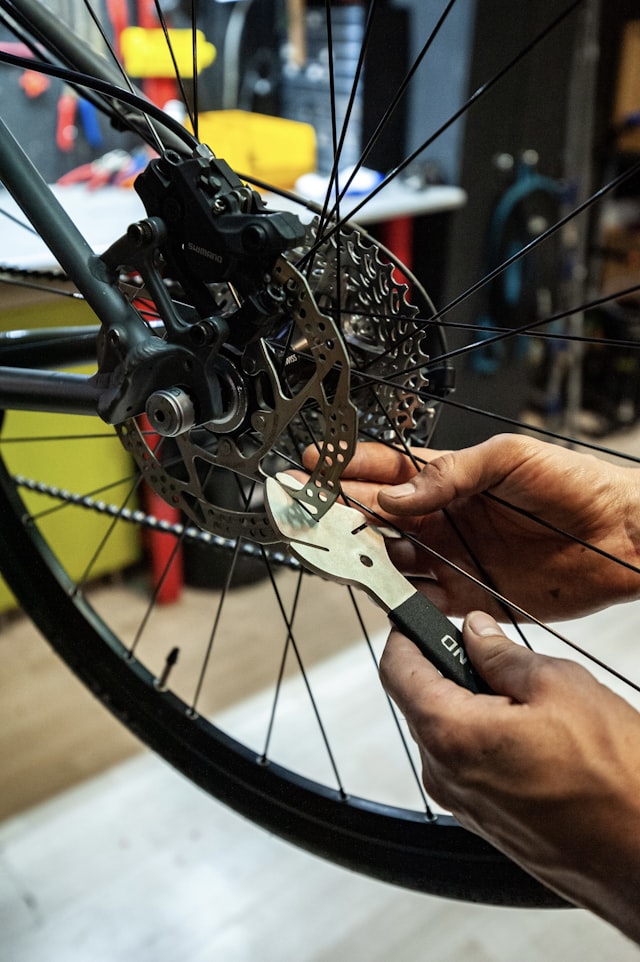
Check chain wear with a simple chain checker. Chains on e-bikes, especially mid-drives, stretch faster, and replacing a chain at 0.5 percent wear saves the cassette. Inspect the brake rotors for scoring and the brake lever reach for drift, which on mechanicals means a cable adjustment and on hydraulics may mean worn pads. Look at the battery contacts and the charge port; clean with a dry cloth and a touch of contact cleaner if they look dull.
Run through the electrics: lights, display buttons, throttle return, brake cut-off (the motor should stop when either lever is pulled). A throttle that sticks or a cut-off that does not work is a safety problem worth fixing before the next ride.
Advertisement
Seasonally and yearly
Twice a year, or at the start and end of summer, do a more careful pass. Re-torque every bolt you can reach to spec using a torque wrench, replace brake pads and bleed hydraulic brakes if the lever feels soft, check bearings for play by rocking the wheels and headset, and inspect tires for sidewall cracking, which Texas sun causes quickly. Replace tubes that have been patched more than twice.
Yearly, have a shop or a competent friend look at wheel true and spoke tension, hub bearings, bottom bracket play and derailleur hanger alignment. If your bike has a hydraulic system, a yearly bleed is reasonable. Check the battery's capacity against its original range; a pack that has lost more than a third of its range is aging and worth planning for. Inspect the charger cable and plug for damage.
Summer-specific: bring the battery indoors if the garage exceeds 100 degrees, and inspect grips, saddle and tires for heat damage. Winter-specific: store the battery at mid charge if you will ride less, and keep the chain lubricated against the occasional wet week.
What to leave to a shop or an assessment
Some work is better handed off. Anything involving opening the battery case or the controller, splicing high-current wiring, or diagnosing intermittent electrical faults without the right tools. Hydraulic brake bleeds are learnable but messy the first time. Wheel building and truing are skills. Motor internals on geared hubs and mid-drives are shop work.
If the bike has developed a symptom rather than a wear item, start with our troubleshooting pages; they are organized by what you see, from a bike that will not turn on to a motor that cuts out. For anything those do not resolve, the E-Bike Assessment is a quick way to get a sense of what is wrong before you order parts or pay for a bench fee.
Dealing with a problem right now?
Get an E-Bike Assessment — a clear report on what is likely wrong and what to do next.
Frequently asked questions
How often should I lube an e-bike chain?
Every week or so with regular riding, or whenever it looks dry or sounds gritty. Wipe before and after applying. Dry or wax lubes suit North Texas dust; wet lubes suit rainy stretches.
Can I wash my e-bike with a hose?
A gentle hose rinse is fine with the battery installed and the display covered, but never use a pressure washer, and avoid directing water at the motor axle, controller or battery contacts. Dry the bike afterward. A damp cloth and bike cleaner is safer.
How often do e-bike brake pads need replacing?
It varies with weight, terrain and pad compound, but 500 to 1,500 miles is typical for heavier bikes. Check visually monthly and replace when about a millimeter of material remains.
Do I need a torque wrench?
It is worth owning one. E-bikes have motor axle nuts, stems and rotor bolts with specific torque values, and both under- and over-tightening cause problems. A small preset or adjustable torque wrench covers most of them.
What is the most neglected maintenance item on e-bikes?
Tire pressure, by a wide margin, followed by the motor axle nuts. Soft tires cause flats and sluggishness on heavy bikes; loose axle nuts can let the motor spin in the dropouts and cut its cable.