Frisco E-Bike

Accessories

Lighting (Accessory)

USB-rechargeable headlights, taillights and helmet lights.

Many e-bikes come with wired lights, but the stock headlight is often a low-output unit meant to make you visible rather than to light the road, and the taillight may be a single small LED. At e-bike speeds you outride a weak beam quickly; seeing a pothole or a rope across a trail in time to react at 25 mph needs a real headlight. Add-on rechargeable lights fix that without any wiring, and a helmet light points where you look.

For a headlight, think in terms of beam shape and output together. On shared trails and in town, a lens with a horizontal cutoff, like a car low beam, lights the road without blinding oncoming riders and walkers; a round flashlight beam needs to be aimed down carefully. Somewhere around 600 to 1,000 lumens with a good beam pattern covers most road and greenbelt riding; more is useful on unlit trails. For taillights, brightness and a wide-angle lens matter more than lumens, and a daytime flash mode is worth using even in bright Texas sun.

Battery run time is the practical limiter. Check run time on the mode you will actually use, not the lowest setting, and remember that cold and age shorten it. Some add-on lights can run from a USB port on the e-bike display, which is a nice way to avoid charging another battery; confirm the port's output can keep up. Mount lights so racks, bags and fenders do not block them, and carry a small backup if your commute depends on getting home after dark.
1 products

Shop lighting (accessory)

Open a product for our full notes, pros and cons, and the link to its Amazon listing. We do not sell or ship products ourselves.

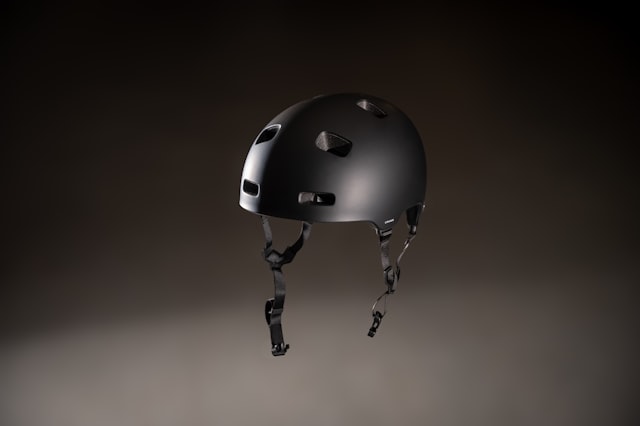
Black ventilated bike helmet
Lighting (Accessory)

NiteRider Lumina 1200 Boost Headlight

The Lumina 1200 Boost is for riders who go faster or ride darker places than a suburban bike path: it throws 1200 lumens in boost mode, has a lock mode so it will not turn on in a bag, and a sturdy bar strap mount. It is a popular light for eMTB and fat-tire riders who hit unlit trails, and for Class 3 commuters covering ground quickly. Runtime at full power is short, so you use boost as needed and cruise on medium. It is heavier and more expensive than the Cygolite Metro Plus. NiteRider has a long track record of durable housings.

Best for: Trail and unlit path riders · Faster Class 3 commutes · Riders who want boost on demand

How to choose lighting (accessory)

Beam pattern and output

A cutoff beam lights the road without blinding others and is ideal on shared paths. Aim for roughly 600 to 1,000 lumens for road and greenbelt use; more for dark trails. Taillights should be bright and wide-angle with a daytime flash.

Run time on real modes

Check run time at the brightness you will use. Plan for your longest ride with margin, and charge regularly. Lights with a fuel gauge help.

Mounting and placement

Bar, fork-crown, helmet or rack mounts each have trade-offs. Make sure bags and racks do not block the light, and that the mount holds steady on a vibrating bar.

Power source

USB-rechargeable lights are simplest. Some can run from the display's USB port; confirm the port's output. Wired lights that tap the main battery are a separate category.

Weather sealing

Look for a real water resistance rating. Charging ports with good covers survive North Texas storms; cheap ones corrode.

Installation considerations

  • Aim the headlight so the bright edge of the beam hits the road a few bike lengths ahead, not into oncoming eyes.
  • Mount taillights where they are not hidden by a bag or rack; a rack-mount plate or seatstay mount helps.
  • Tighten mounts snugly, check for rotation after a few rides, and use any tether supplied.

Frequently asked questions

How many lumens do I need for an e-bike?

For road and trail commuting, roughly 600 to 1,000 lumens with a good beam pattern is plenty; unlit singletrack may want more. Beam shape and aiming matter as much as the number.

Can I power an add-on light from my e-bike battery?

Some displays have a USB port that can run or charge a light; check its output. Wiring a light directly to the main battery needs the correct voltage converter and is best left to someone comfortable with e-bike electrical work.

Should I use flashing lights?

Daytime flash on a taillight improves visibility. At night, steady or a gentle pulse is easier for drivers to judge distance; flashing headlights on shared paths are unpleasant for others.

My stock headlight is weak. Can I just replace it?

Sometimes. Many wired headlights run on 6 or 12 volts from the controller, and the replacement must match. An add-on rechargeable light avoids the compatibility question entirely.

More accessories categories