Frisco E-Bike

Maintenance

Brake Tools

Rotor truing forks, pad spreaders, bleed kits and caliper alignment tools.

Brakes on an e-bike work harder than on a pedal bike, and they need attention more often. A heavier bike at higher speeds heats rotors, wears pads faster, and makes a slightly bent rotor or a misaligned caliper a constant rubbing irritation. Most of the common brake problems are fixable at home with a handful of inexpensive tools, and doing the work yourself also tells you when a problem is beyond simple adjustment.

The basic kit: a rotor truing fork to straighten small bends, a pad spreader or plastic lever to push pistons back before fitting new pads, and hex and Torx bits to loosen and re-tighten the caliper bolts for alignment. A caliper alignment tool, which is a thin spacer that slides over the rotor, makes centering the caliper easier than squeezing the lever and hoping. Isopropyl alcohol and clean rags for rotor cleaning belong in the same drawer.

Hydraulic brakes add a bleed kit matched to your brake's fluid: mineral oil for many commuter e-bike brakes, DOT fluid for some others, and never mix them. Bleeding is approachable with the correct kit and the maker's procedure, but it is messy and fluid on pads ruins them, so work carefully. Many e-bike brake problems are simpler than they look; our troubleshooting page on brake rubbing walks through the checks, and if the lever goes to the bar, a brake is leaking, or the motor cutoff sensors misbehave, an E-Bike Assessment or a shop visit is the safer path. Brake work is also where a torque wrench pays for itself: caliper and rotor bolts have small specs that are easy to overshoot.

2 products

Shop brake tools

Open a product for our full notes, pros and cons, and the link to its Amazon listing. We do not sell or ship products ourselves.

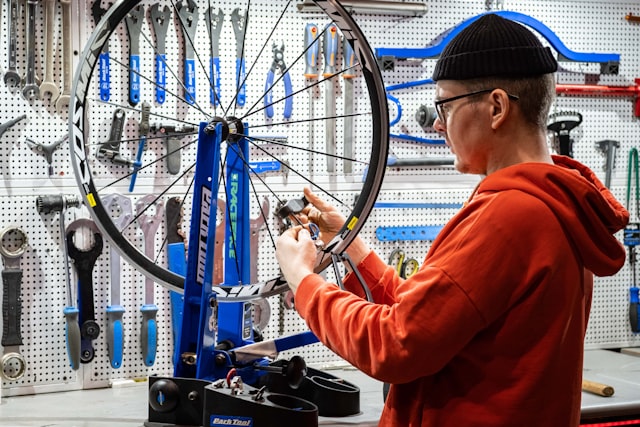
Bike maintenance in a workshop
Brake Tools

EZmtb Hydraulic Brake Bleed Kit (Shimano / Tektro / Magura compatible)

EZmtb's bleed kit is the widely sold generic kit with syringes, tubing, a bleed cup, a selection of fittings and, in most versions, a bottle of mineral oil. It covers the mineral-oil brakes that ship on most e-bikes — Tektro, Shimano and Magura — and the fittings list usually includes SRAM adapters too, but verify the exact kit contents against your brake model before buying. Bleeding is a methodical job, and a spongy lever on a heavy e-bike is a safety issue, so follow the brake maker's procedure. If you are unsure, this is a job to hand to a shop or get an E-Bike Assessment before riding with questionable brakes.

Best for: Mineral-oil brake bleeds at home · Tektro and Shimano brakes on e-bikes · Riders comfortable following a detailed procedure

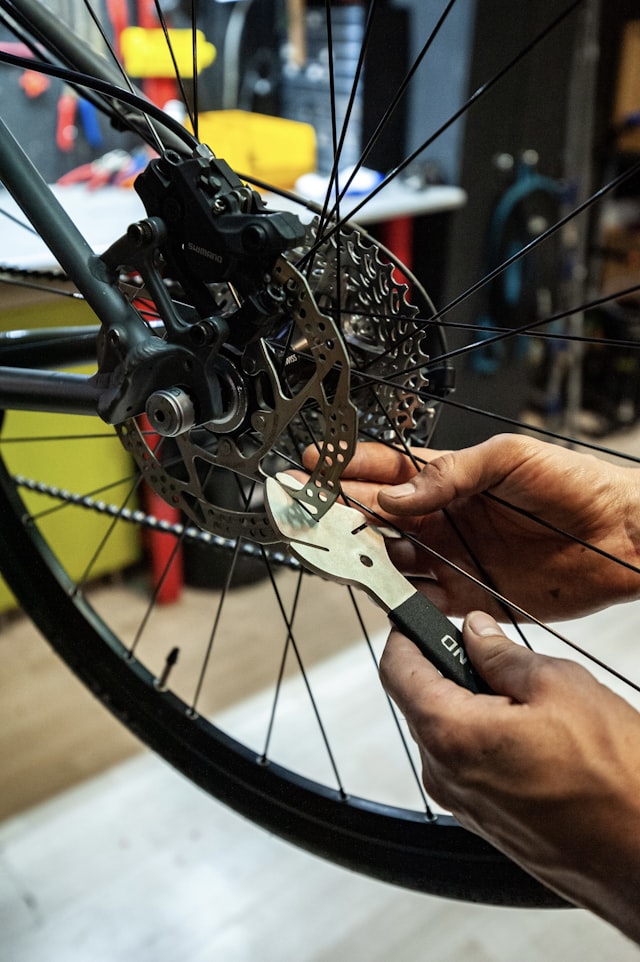
Technician repairing a bicycle in a bike shop
Brake Tools

Park Tool PP-1.2 Hydraulic Brake Piston Press

When you change hydraulic brake pads you have to push the caliper pistons back into their bores, and doing it with a screwdriver scratches pistons and cocks them sideways. The PP-1.2 is a flat, wide press that pushes both pistons back evenly and is thin enough to fit into the caliper with the pads removed. It also works to spread pads that have crept inward after a lever was squeezed without a rotor. Many e-bikes ship with Tektro or Shimano hydraulic calipers, and this tool fits them. Clean the pistons before pushing them back so grit does not get forced past the seals.

Best for: Hydraulic brake pad changes · Resetting pistons after a lever squeeze with the wheel out · Tektro and Shimano calipers common on e-bikes

How to choose brake tools

Rotor truing tool

A slotted truing fork that grips the rotor without marring. Use small, gentle bends and spin the wheel to check. Large bends usually mean a new rotor.

Pad spreader and piston tools

A plastic or coated spreader pushes pistons back without scratching. Avoid screwdrivers, which gouge pistons and pads.

Alignment aids

A caliper alignment spacer centers the caliper on the rotor before tightening. Pair it with a torque wrench for the caliper bolts.

Bleed kit matched to your brake

Mineral oil and DOT systems use different fluids, fittings and procedures. Buy the kit and fluid for your brake brand and model, and follow the maker's instructions.

Cleaning supplies

Isopropyl alcohol, lint-free rags and a pad sanding block. Brake cleaner sprays are harsh near seals and wiring; alcohol is enough for rotors.

Maintenance tips

  • Check pad thickness monthly on an e-bike; heavy bikes wear pads quickly. Replace before the backing plate nears the rotor.
  • Clean rotors with alcohol when they squeal; contamination from lube or degreaser is the usual cause.
  • Torque caliper bolts and rotor bolts to spec; loose brake hardware is a safety problem at e-bike speeds.
  • Do not squeeze a hydraulic lever with the wheel out unless a bleed block or spacer is in the caliper.

Frequently asked questions

Why do my e-bike brakes rub?

Usually a misaligned caliper, a slightly bent rotor, or pistons that are not retracting evenly. Loosen the caliper, center it on the rotor, re-tighten, and true any bends. Our brake rubbing troubleshooting page goes step by step.

Can I true a bent rotor or should I replace it?

Small wobbles can be trued with a fork; large bends or any warping from heat mean a new rotor. Rotors on heavy e-bikes are consumables.

Do I need a bleed kit?

Only if you have hydraulic brakes and the lever feels spongy or pulls too far after pad replacement. Buy the kit and fluid specified for your brake; mineral oil and DOT are not interchangeable.

When should I stop and get help?

If the lever pulls to the bar, fluid is leaking, the motor does not cut when you brake, or the bike pulls or shudders hard under braking. Those go beyond simple adjustment; an E-Bike Assessment or a shop is the safer move.

More maintenance categories