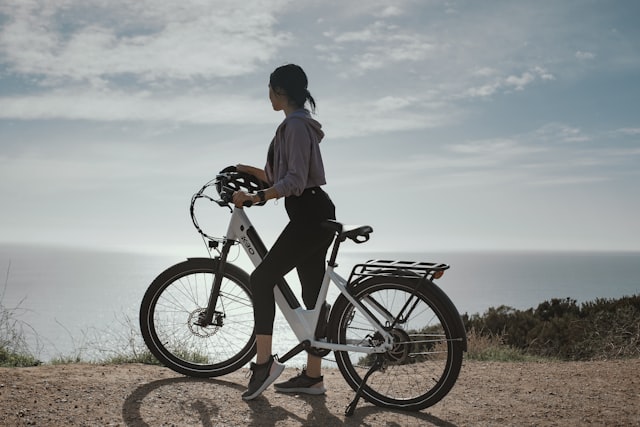
Premium E-BikesFeatured
Specialized Turbo Vado 4.0 Commuter E-Bike
Best for: Riders who commute daily and want the best ride feel · Anyone who wants local dealer service · Longer and hillier commutes
View details & where to buy
Sold on Amazon
Comparison · updated 2026-08-22
E-bikes are heavier and faster than regular bikes, and brakes are where that shows up first. Nearly all e-bikes use disc brakes, but there are two ways to squeeze the caliper: a steel cable pulled by the lever (mechanical) or a sealed line of fluid pushed by the lever (hydraulic). The difference in feel is immediate. Hydraulics stop a 65 lb bike with a finger or two and self-adjust as pads wear; mechanicals need a firmer grip and periodic cable adjustment.
Mechanical discs are not bad brakes, and a well-set-up pair with good pads stops an e-bike just fine. They are cheaper, simpler to understand, and fixable with a hex key on the side of a trail. Hydraulics cost more and ask for a bleed once in a while, but for heavier riders, cargo loads, Class 3 speeds and hilly terrain they are the safer choice. Here is how the two compare in the ways that matter day to day.
A
Cable-actuated calipers, usually with one moving pad pushing the rotor against a fixed pad. Cheap, simple and adjustable with basic tools. Require more hand effort, regular cable and pad adjustment, and tend to feel less consistent as they wear.
B
Fluid-actuated calipers, usually with two or four pistons pressing both pads. Strong, light-touch braking that self-adjusts for pad wear. Cost more, need an occasional bleed, and leaks or air in the line require a proper fix.
| Criterion | Mechanical Disc Brakes | Hydraulic Disc Brakes |
|---|---|---|
| Stopping power and modulation | Adequate to good. Harder to apply the same force at the rotor; long descents and heavy loads reveal the limit. | Strong and easy to modulate. Consistent from the first squeeze to the last on a long descent. |
| Lever effort | Firm grip required, tiring on long descents and for riders with smaller hands or grip issues. | One or two fingers. A big advantage for heavy bikes and riders with hand fatigue. |
| Routine maintenance | Cable stretch means periodic barrel-adjuster turns and pad-to-rotor gap adjustments. Cable and housing eventually need replacing. | Self-adjusting for pad wear. A fluid bleed every year or two, or when the lever feels spongy. |
| Trailside repair | Easy. A hex key fixes most issues; a broken cable is a cheap and common part. | Limited. A cut hose or air in the line means a bleed kit and fluid, best done at home or a shop. |
| Cost | Standard on most bikes under about $1,200. Replacement calipers and levers are inexpensive. | Adds to bike cost; common from about $1,300 up and on nearly all premium bikes. Upgrading later typically runs a few hundred dollars in parts. |
| Pad wear | Often uneven, since only one pad moves on many designs. Pads can drag if the fixed side is set too close. | Even wear with both pads moving. Easier to keep rub-free. |
| Motor cut-off sensors | E-bike mechanical levers with cut-off sensors are common and generic. | Hydraulic levers with cut-off sensors exist but must match the brake system; fewer generic options. |
| Weather and contamination | Cables can corrode and get gritty. Pads contaminate just like hydraulics. | Sealed system shrugs off water and grit. Fluid degrades slowly; mineral oil and DOT fluid are not interchangeable. |
| Who needs which | Light bikes, moderate speeds, flat terrain, DIY-minded owners on a budget. | Heavy bikes, heavy riders, cargo, Class 3 speeds, hills, anyone who values light lever effort. |
Advertisement
Mechanical disc brakes are a reasonable choice on a lighter e-bike ridden at Class 1 or 2 speeds on flat terrain, which covers a lot of North Texas. Budget bikes ship with them for a reason, and if you are comfortable turning a barrel adjuster and swapping pads they will serve you well. Upgrade the pads to a quality compound, keep the cables fresh, and learn to set the fixed pad correctly and you will get most of what you need.
Hydraulic brakes are worth the money for anything heavy or fast: fat-tire bikes over 60 lb, cargo and child-carrying setups, riders over about 220 lb, Class 3 commuters and anyone riding real hills. They also make the bike easier to live with because they adjust themselves. If your brakes have gone spongy, started dragging, or the lever pulls to the bar, see our brake rubbing page; if the cause is not obvious, an E-Bike Assessment is a good way to sort mechanical from electrical symptoms such as a stuck brake cut-off switch.
Best for: Riders who commute daily and want the best ride feel · Anyone who wants local dealer service · Longer and hillier commutes
Sold on Amazon
Best for: E-bikes with Tektro HD-E350, HD-M275/M285/M290 style calipers and Aries/Novela mechanicals · Riders who want the OEM pad shape without guessing · Replacing worn resin pads at the first squeal
Sold on Amazon
Usually yes. You need hydraulic levers, calipers, hoses and rotors of the right mount type, plus e-bike levers with motor cut-off sensors if your bike relies on them. Budget a few hundred dollars including labor if a shop does it. Check that the new levers' cut-off connector matches your controller.
Usually contamination on the pads or rotor, glazed pads, or a misaligned caliper. Clean the rotor with isopropyl alcohol, sand the pads lightly or replace them, and recenter the caliper. If the noise persists under light braking, the pads may simply need bedding in.
For most riders, every one to two years or when the lever feels spongy or pulls closer to the bar than it used to. A bleed replaces old fluid and removes air. Use only the fluid type the brake specifies: mineral oil and DOT fluid damage each other's seals.
Bigger rotors (180 or 203 mm) increase leverage and heat capacity and help either type. On a heavy bike with mechanicals, going from 160 to 180 mm is a cheap improvement. It does not fix lever effort or self-adjustment, which are the hydraulic advantages.
The shapes are the same, but e-bike or sintered metallic compounds handle the heat of stopping a heavy bike better and last longer. Organic pads are quieter and bite faster but wear quicker under e-bike loads.