Explainer · updated 2026-08-22
E-Bike Theft Prevention: Locks, Habits and Recovery
E-bikes are attractive to thieves for the same reason they are attractive to you: they are worth a lot and they move fast under their own power. A thief who cuts a cable lock can ride off at 20 mph without pedaling. The batteries alone resell easily. None of this means you should leave the bike in the garage, but it does mean a cable lock and optimism are not a plan.
Theft prevention is layers: a lock that takes real tools and time to defeat, locking technique that does not give the thief an easy angle, parking choices that keep the bike visible, and a tracker or registration that helps recovery if the first layers fail. At home, where most thefts actually happen, it is about the garage door and the battery. This guide walks through each layer and is honest about what works and what is theater.
Choosing a lock that matches the bike
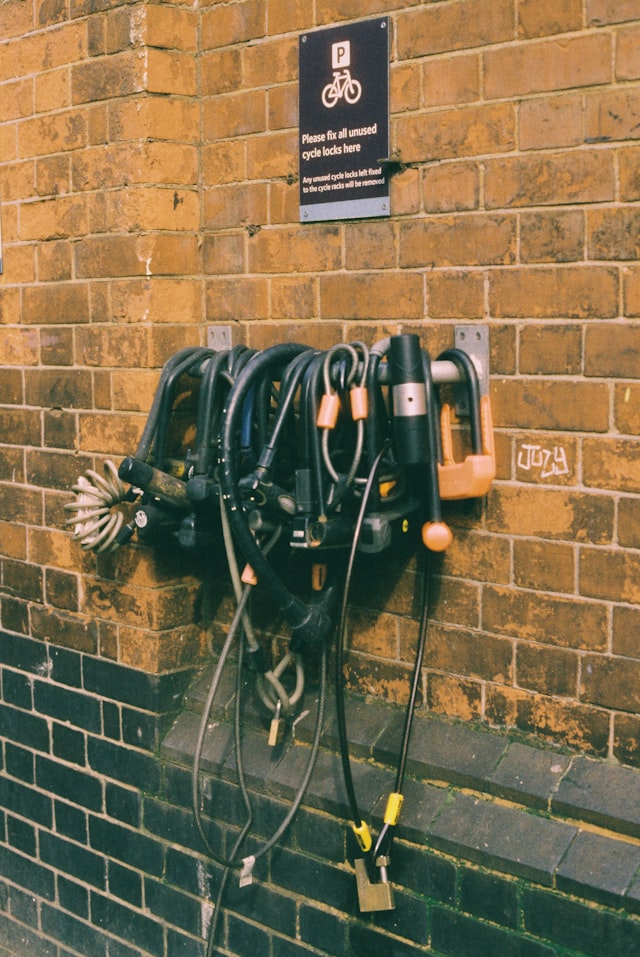
The lock should cost roughly 10 percent of the bike's value and should be a U-lock, a heavy chain with a hardened padlock, or a good folding lock. Cable locks are defeated in seconds with hand cutters and should only be a secondary lock for wheels. Look for independent ratings such as Sold Secure Gold or Diamond or ART levels; they indicate the lock resisted a standardized attack, which is more useful than any marketing claim.
U-locks are the best value for most riders; choose a shackle of 13 mm or thicker, and a size that fits your frame and the rack you use without leaving a lot of empty space a thief can use to lever. Chains around 10 mm or thicker with a quality padlock are flexible for odd racks but heavy. Folding locks are convenient and decent at higher ratings but have more joints to attack. Angle-grinder-resistant locks exist and are worth it in high-theft areas; they are heavy and expensive.
Two locks of different types defeat more thieves than one great lock, because most carry one tool. A U-lock through the frame plus a chain or cable through the wheels is a sensible combination for a bike left in public.
How to lock it properly
Lock the frame, not just a wheel, to something immovable that cannot be lifted over or cut: a proper bike rack anchored in concrete, not a sign post, a young tree or a chain-link fence. Put the U-lock through the frame triangle and the rear wheel with the shackle filled as much as possible and the keyway facing down or away from easy access. Secure the front wheel with a second lock or a cable if it has a quick release.
Take the battery with you if it removes easily and you will be gone more than a few minutes; a bike without a battery is less attractive and the battery is the most resellable part. Take the display if it is the removable kind. Do not leave a helmet, bag or lights on the bike. If your bike has a frame lock on the rear wheel, use it in addition to the main lock, not instead of it.
Where to park and for how long
Visibility and traffic are your friends. Park where people walk by constantly and a thief with tools would be conspicuous. Avoid leaving an e-bike locked outside overnight anywhere; the longer a bike sits, the more time a thief has to come back with the right tool. Busy shopping centers, campus racks near entrances and transit station bike lockers, where available, are better than a quiet side street.
For commuting, the ideal is indoor storage at work. If that is not possible, a covered bike room, a locker, or at minimum a rack near a staffed entrance. Vary where you lock if you commute to the same place daily; a bike in the same spot every day is a bike a thief can plan for.
Trackers, alarms and registration
A hidden tracker is the layer most likely to get a stolen bike back. Bluetooth tags such as AirTags in a concealed mount are inexpensive and work through the crowd network; dedicated GPS trackers are more reliable but need a subscription. Hide the tracker somewhere non-obvious, such as inside the seat tube, under a reflector or inside a bar end, and accept that a savvy thief may find it. It still recovers plenty of bikes.
Motion alarms, either standalone or built into a lock, deter opportunists with noise but do not stop a determined thief. They are a cheap extra layer. Register the bike with a national registry such as Bike Index or Project 529 and with your local police department if they offer it; record the serial number and photos, and keep the receipt. Check whether your homeowner's or renter's policy covers the bike away from home and at full value; many cap bicycle coverage low, and a rider or standalone bike insurance can be worth it for a pricier bike.
Advertisement
Home and garage storage
A large share of e-bike thefts happen from garages, sheds and apartment bike rooms. Keep the garage door closed and consider a sensor that alerts you if it is left open. Lock the bike even inside the garage, to a floor or wall anchor, so that an open door does not mean a lost bike. In shared bike rooms, assume the room's lock is weak and use your own U-lock to a rack.
Store the battery indoors, which is good for theft and for battery life in the Texas heat. A bike cover hides the bike from a casual glance through a window and keeps dust off. If the bike lives on a porch or balcony, it needs a real anchor and lock, not a railing.
If it is stolen
Report it to the police immediately with the serial number, photos and any tracker location; a report number is needed for insurance and for recovery if the bike is found. Update the registry listing to stolen. Check local online marketplaces and social media resale groups daily for a week or two; many stolen e-bikes are listed quickly. Do not attempt a recovery yourself; give the location to police.
If you get the bike back, it is worth a careful check before riding. Thieves are rough on bikes and batteries; a dropped or abused pack should be treated with suspicion. Our setup checklist covers what to look over, and the E-Bike Assessment can help if the bike behaves oddly afterward.
Dealing with a problem right now?
Get an E-Bike Assessment — a clear report on what is likely wrong and what to do next.
Frequently asked questions
What kind of lock is best for an e-bike?
A U-lock with a 13 mm or thicker shackle and an independent security rating is the best value for most riders, ideally paired with a second lock of a different type for the wheels. Cable locks alone are not adequate.
Should I remove the battery when I park?
Yes, when it removes easily and you will be gone more than a few minutes. The battery is valuable and easily resold, and a bike without one is less tempting. It also keeps the battery out of the heat.
Do AirTags work for finding a stolen bike?
Often, yes, especially in populated areas where the crowd network is dense. They can be detected and removed by a careful thief, so hide them well. A dedicated GPS tracker is more reliable but needs a subscription.
Does homeowner's insurance cover a stolen e-bike?
Sometimes, but many policies cap bicycle coverage at a low amount or exclude motorized bikes. Check your policy and consider a scheduled rider or standalone bike insurance for a bike worth more than a thousand dollars.
Is it safe to leave an e-bike locked outside overnight?
We would not. Even a good lock only buys time, and overnight gives a thief plenty. Bring it inside or into a locked, anchored space.