Frisco E-Bike

E-Bikes

Teen E-Bikes

Class 1/2 bikes with appropriate speed, size and safety features for teens.

Buying an e-bike for a teenager is mostly a question of restraint: enough bike to be useful and fun for school, practice and friends' houses, and not so much that a 14-year-old is doing 28 mph in traffic. The sensible target is a Class 1 or Class 2 bike — pedal assist (and optionally a throttle) that stops helping at 20 mph — with a frame that actually fits, brakes sized for the weight, and lights and reflectors built in. Many of the bikes marketed to teens online are fast moped-style machines with big motors, and those are exactly what you want to avoid for a new rider.

Size and class are the first filters. Compact 20 inch wheel bikes and smaller step-through frames fit riders in the 5'0" to 5'8" range well and keep the weight manageable; a 70-pound fat bike is hard for a lighter teen to handle at walking speed. Look for a stated rider height range that includes your teen now, with some room to grow via seatpost and stem. Cadence-sensor Class 2 bikes are fine, but be aware that a throttle invites riding without pedaling and wears out the battery faster. Hydraulic brakes are a meaningful safety upgrade for a rider who is still learning to judge stopping distance.

Local law matters more than people expect. Texas defines three e-bike classes and generally treats them as bicycles, but cities, school districts and trail managers set their own rules about minimum ages, helmets, where e-bikes can ride and whether Class 3 or throttle bikes are allowed. Check with your city and your teen's school before buying, and set house rules: helmet every ride, lights on, no passengers, no modifications to unlock speed. If a teen's bike starts behaving oddly — cutting out, braking weakly, surging — stop riding it and get an E-Bike Assessment rather than letting a young rider troubleshoot a 60-pound powered vehicle.
3 products

Shop teen e-bikes

Open a product for our full notes, pros and cons, and the link to its Amazon listing. We do not sell or ship products ourselves.

Man riding an e-bike down a street
Lightweight E-Bikes

Aventon Soltera.2 Lightweight E-Bike

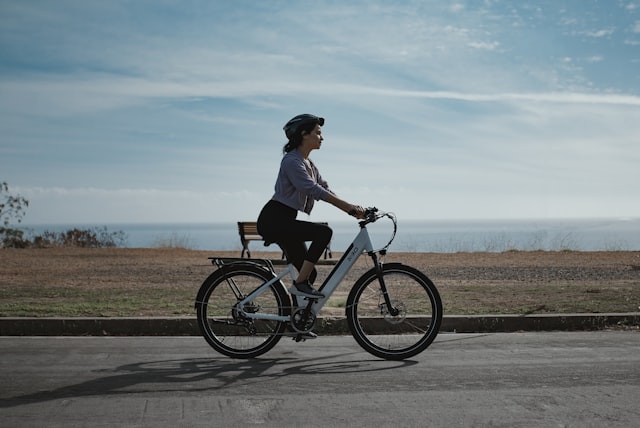
The Soltera.2 is Aventon's minimalist city bike: skinny 700c tires, a 350W hub motor and a slim 36V battery hidden in the downtube. The payoff is a bike in the mid-40 lb range that you can carry up a flight of stairs, and one that pedals like a regular bike when the battery is flat. The trade-off is modest power and range; hills and heavy riders will feel the limit. It ships as Class 2 with a throttle, and the single-speed version keeps maintenance to almost nothing. A good fit for flat campuses and short commutes.

Best for: College campuses and flat commutes · Apartment dwellers who carry the bike · Riders who want a bike that still pedals well unpowered

Rider on an electric bicycle on a road
Budget E-Bikes

Jasion EB5 Electric Bike

The Jasion EB5 is one of the best-selling entry-level e-bikes on Amazon and a reasonable first bike if your expectations match the price. It is a 26-inch hybrid with a 350W rear hub motor, a small 36V battery, a 7-speed drivetrain, a basic suspension fork and mechanical disc brakes. It is light by e-bike standards and fine for flat campus and neighborhood trips under 10 miles. It is not a hill climber, range at high assist is short, and the components are entry-level, so expect to tighten and adjust things yourself. Keep weight and distance modest and it does the job.

Best for: First e-bike on a tight budget · College students on flat campuses · Teens and lighter adults

Electric bicycle parked on a sidewalk
Teen E-Bikes

Super73 Z Miami E-Bike

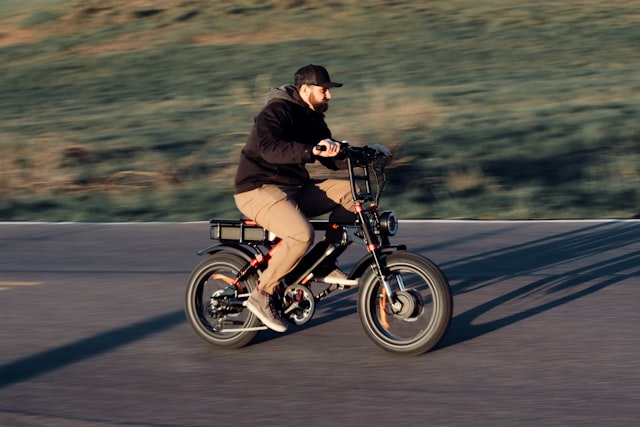
The Z Miami is the entry point to Super73's moped-style lineup and the model most often bought for teenagers. It has a low, compact frame, 20-inch wide tires, a bench-style seat and a 48V rear hub motor, shipping in Class 2 mode with a 20 mph throttle. Pedaling is secondary on this kind of bike; it is really a small electric moped that happens to have cranks. The app can unlock faster modes, which parents should know about. It is well built and easy to find parts for, but it is heavy, has limited range, and is not a practical bike for actual pedaling.

Best for: Teens who want the moped look · Neighborhood cruising · Short trips with a throttle

How to choose teen e-bikes

Class 1 or Class 2 only

Choose a bike that stops assisting at 20 mph. Avoid Class 3 (28 mph) and anything marketed as off-road-only with unlockable speeds; those are inappropriate for a new rider and often restricted locally.

Frame size and weight

Look for a stated height range that fits your teen with room to grow and a bike weight they can manage — ideally under 60 pounds. 20 inch wheel compact and small step-through frames work well for most teens.

Brakes, lights and reflectors

Hydraulic disc brakes are a real safety upgrade for inexperienced riders. Integrated front and rear lights and reflective sidewalls help on early-morning and evening rides to school.

Battery and charging habits

A 36V or 48V pack of 350 to 500Wh covers school runs with margin. Teach the rider to charge indoors on a hard surface with the supplied charger and to unplug when full.

Local rules and school policy

Confirm any minimum age, helmet requirement, and where e-bikes may be ridden in your city, and whether the school allows e-bike parking. Rules vary between neighboring cities.

Maintenance tips

  • Do a weekly parent check: tire pressure, brake function, lights, and that the battery is latched.
  • Teach the rider to walk the bike home and tell someone if it cuts out or the brakes feel weak, not to keep riding.
  • Keep the charger in one spot indoors and charge on a hard, open surface away from bedding.
  • Replace brake pads when worn; teens brake hard and often.

Frequently asked questions

What class of e-bike is appropriate for a teenager?

Class 1 (pedal assist to 20 mph, no throttle) is the most conservative; Class 2 adds a throttle but keeps the 20 mph limit. Class 3 bikes and moped-style high-speed bikes are not a good fit for a new rider and are restricted in many places.

Is there a minimum age to ride an e-bike in Texas?

Texas law defines e-bike classes but does not set a statewide minimum age for Class 1 and 2 bikes to our knowledge; some cities, counties and trail systems add their own age and helmet rules. Verify with your city before your teen rides.

How fast do teen e-bikes go?

Class 1 and 2 bikes stop assisting at 20 mph; the rider can pedal faster but the motor does not help. That is fast enough for a teenager and is the limit most paths and trails accept.

Should I get a throttle for my teen?

A throttle is convenient for starts and is legal on Class 2 bikes, but it encourages riding without pedaling and drains the battery faster. If your teen is responsible, it is fine; if not, a Class 1 pedal-assist-only bike is the safer choice.

Do teens need a special helmet for e-bikes?

A certified bicycle helmet is the minimum; helmets meeting the NTA 8776 e-bike standard offer more coverage for higher speeds. The most important thing is that it is worn every ride.

More e-bikes categories