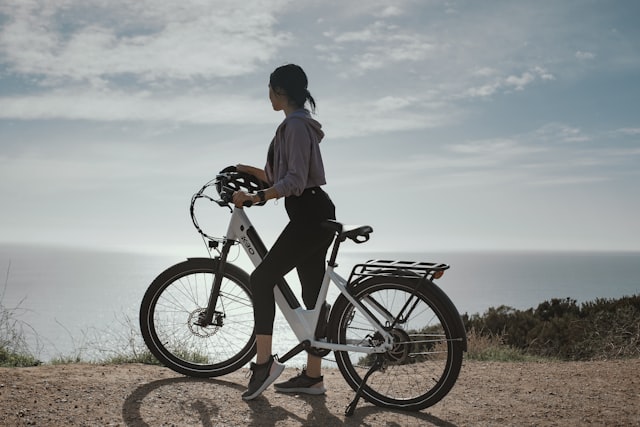
Big batteries (or dual packs) for 60+ mile rides between charges.
Long-range e-bikes are built for riders who want 60-plus miles between charges: big single batteries, dual-battery setups, or efficient drivetrains that stretch a normal pack. Before comparing bikes, learn the one number that matters: watt-hours (Wh). Multiply battery voltage by amp-hours — a 48V 20Ah pack is 960Wh, a 52V 14Ah pack is about 728Wh. Then divide by roughly 20Wh per mile for a typical rider at moderate pedal assist on mostly flat ground. That 960Wh pack gives about 48 miles; a dual-battery 1,400Wh bike gives about 70. Advertised ranges are often based on the lowest assist level, a light rider and no wind, so treat them as a ceiling, not a plan.
Real consumption swings from about 10Wh per mile (light rider, low assist, smooth trail, slow speed) to 35Wh or more (throttle, hills, headwind, fat tires, 28 mph). In North Texas, summer heat is an overlooked factor — batteries perform fine when hot, but riding faster to find a breeze and using more assist to avoid sweating both raise consumption, and storing a pack in a 120-degree garage shortens its life, which reduces capacity over time. Tire pressure, rider weight, cargo and stop-and-go traffic all matter too. Range is a behavior as much as a spec.
When shopping, compare Wh first, then efficiency. A torque-sensor mid-drive on narrow tires goes farther per watt-hour than a cadence-sensor hub motor on fat tires. Dual-battery bikes carry a lot of weight and cost, so consider whether a single 700 to 1,000Wh pack plus a spare charger at work covers your needs. If a bike you already own has lost noticeable range without any change in how you ride, that can indicate aging cells, a weak cell group or a connection issue — an E-Bike Assessment can help you figure out which before you buy a new battery.