Frisco E-Bike

E-Bikes

Long Range E-Bikes

Big batteries (or dual packs) for 60+ mile rides between charges.

Long-range e-bikes are built for riders who want 60-plus miles between charges: big single batteries, dual-battery setups, or efficient drivetrains that stretch a normal pack. Before comparing bikes, learn the one number that matters: watt-hours (Wh). Multiply battery voltage by amp-hours — a 48V 20Ah pack is 960Wh, a 52V 14Ah pack is about 728Wh. Then divide by roughly 20Wh per mile for a typical rider at moderate pedal assist on mostly flat ground. That 960Wh pack gives about 48 miles; a dual-battery 1,400Wh bike gives about 70. Advertised ranges are often based on the lowest assist level, a light rider and no wind, so treat them as a ceiling, not a plan.

Real consumption swings from about 10Wh per mile (light rider, low assist, smooth trail, slow speed) to 35Wh or more (throttle, hills, headwind, fat tires, 28 mph). In North Texas, summer heat is an overlooked factor — batteries perform fine when hot, but riding faster to find a breeze and using more assist to avoid sweating both raise consumption, and storing a pack in a 120-degree garage shortens its life, which reduces capacity over time. Tire pressure, rider weight, cargo and stop-and-go traffic all matter too. Range is a behavior as much as a spec.

When shopping, compare Wh first, then efficiency. A torque-sensor mid-drive on narrow tires goes farther per watt-hour than a cadence-sensor hub motor on fat tires. Dual-battery bikes carry a lot of weight and cost, so consider whether a single 700 to 1,000Wh pack plus a spare charger at work covers your needs. If a bike you already own has lost noticeable range without any change in how you ride, that can indicate aging cells, a weak cell group or a connection issue — an E-Bike Assessment can help you figure out which before you buy a new battery.

5 products

Shop long range e-bikes

Open a product for our full notes, pros and cons, and the link to its Amazon listing. We do not sell or ship products ourselves.

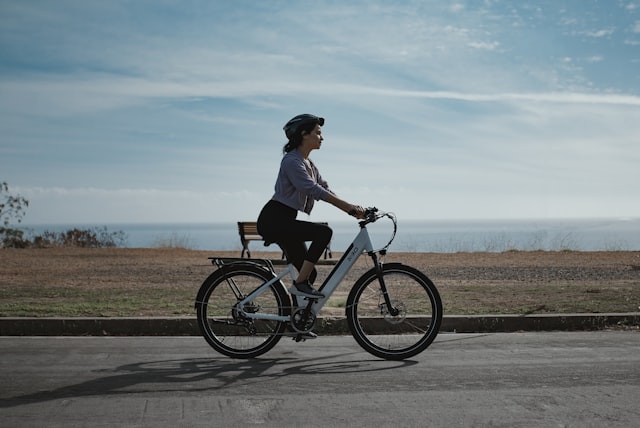
Rider on an electric bicycle on a paved road
Hunting E-Bikes

Freesky Warrior Fat Tire E-Bike

The Freesky Warrior is a 26x4 fat bike marketed at hunters and off-road riders, and it sells on Amazon at a fraction of what dedicated hunting-bike brands charge. It uses a high-output 48V rear hub system with a large-capacity battery, a suspension fork, a rear rack and hydraulic brakes on current versions. It is heavy, torquey and built for dirt roads, ranch trails and hauling a pack, not for refined pavement riding. Support is online-only and build quality is mid-tier, so it suits a handy owner. For budget backcountry access with a rack it is a reasonable alternative to much pricier hunting bikes.

Best for: Hunting access on private land · Ranch and dirt-road riding · Hauling gear on a rack

Man riding an e-bike down a street
Long Range E-Bikes

Himiway Zebra Fat Tire E-Bike

The Zebra is Himiway's flagship fat bike and the brand's main selling point is battery size: a 48V 20Ah (960Wh) pack that comfortably out-ranges the 14Ah packs on most competitors. It runs a 750W rear hub, 26x4 tires, a suspension fork and hydraulic brakes, with a 400 lb payload rating and step-over or step-through frames. It is heavy even by fat-bike standards and uses a cadence sensor. Himiway sells direct and through Amazon with online support. If you ride long distances on mixed surfaces and do not want to carry a second battery, it is one of the most practical choices.

Best for: Long-distance mixed-surface rides · Heavier riders · Riders who want a big battery without a dual-pack setup

Rider on an electric bicycle
Long Range E-Bikes

Juiced Bikes RipCurrent S Fat Tire E-Bike

The RipCurrent S earned its reputation on two numbers: a 52V battery close to 1,000Wh and a 28 mph top speed. Add a 750W Bafang rear hub with high peak power, a torque sensor, hydraulic brakes and 26x4 tires and you get a fast, long-legged fat bike that commuters and trail riders both liked. It is heavy and the 52V system means chargers and batteries are less interchangeable than 48V parts. Juiced went through a business shutdown and change of ownership in 2024 and 2025, so verify current warranty terms and parts availability before buying new or used.

Best for: Long commutes at Class 3 speeds · Riders who want maximum range in a fat bike · Experienced riders comfortable with DIY service

Rider on an electric bicycle on a road
Long Range E-Bikes

Segway Xafari All-Terrain E-Bike

The Xafari is Segway's all-terrain e-bike and its headline feature is range: a 936Wh battery, well above the 672 to 720Wh packs on most rivals. It pairs that with a 750W rear hub, 26x3 tires, a suspension fork and seatpost, hydraulic brakes, a torque sensor and app features like GPS tracking and alarm. It is a big, heavy, comfortable bike for long rides on mixed surfaces. Segway is new to e-bikes, so long-term parts supply is less proven than Rad or Aventon, and the weight is real. If range and comfort are your first two priorities it belongs on the shortlist.

Best for: Long rides between charges · Mixed pavement and gravel · Riders who want app features and theft alarms

Electric bicycle on a concrete floor
Adult E-Bikes

Super73 S2 E-Bike

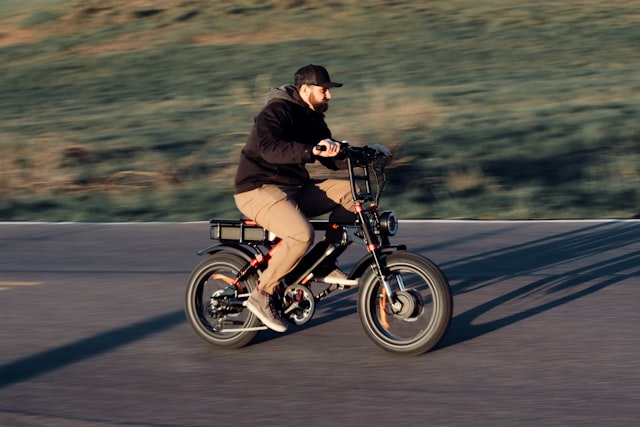
The S2 is Super73's full-size moped-style bike, with a longer frame than the Z series, a large 48V battery, an inverted fork, hydraulic brakes and the brand's signature bench seat and 20-inch wide tires. It ships in Class 2 mode with faster modes available through the app for private land. It is a fun, heavy, motorcycle-flavored machine that draws attention and sells used easily. It is also expensive for a hub-motor bike and awkward to pedal beyond the assist. For adults who want the style and are honest that they will ride it mostly on throttle, it is the nicest of the genre.

Best for: Adults who want the moped aesthetic · Neighborhood and short urban trips · Riders who value brand and resale

How to choose long range e-bikes

Watt-hours, not amp-hours

Compare packs by Wh (volts times amp-hours). A 48V 20Ah pack (960Wh) and a 36V 20Ah pack (720Wh) have the same Ah but very different range. Ignore range claims that do not state the assist level.

Efficiency of the whole bike

Narrow tires, a torque sensor and a mid-drive or efficient geared hub stretch each Wh. A heavy fat-tire throttle bike with a huge pack can have less real range than an efficient commuter with a smaller one.

Single large vs dual battery

Dual-battery bikes give the most range but add weight, cost and a second charger. A single 700 to 1,000Wh pack covers most needs; consider whether a second charger at work solves the problem more cheaply.

Battery cell quality and warranty

Packs built with name-brand cells (Samsung, LG, Panasonic are commonly cited) hold capacity longer. Look for a battery warranty of at least a year and a brand that sells replacements.

Charging speed

A 2A charger takes 8 to 10 hours to fill a 960Wh pack; a 4A or 5A charger cuts that in half. For daily long rides, fast charging matters as much as capacity.

Maintenance tips

  • Charge to 80 to 90 percent for daily use and top to 100 percent only before long rides; it extends pack life.
  • Keep tires at the upper end of their pressure range — it is the cheapest range gain available.
  • Store batteries indoors in summer; heat is the biggest enemy of lithium capacity in Texas.
  • Track your real Wh per mile on the display for a few weeks so you know your own number rather than the advertised one.

Frequently asked questions

How do I calculate e-bike range?

Multiply battery volts by amp-hours to get watt-hours, then divide by about 20 for moderate pedal assist. A 48V 15Ah pack is 720Wh, so roughly 36 miles. Heavy throttle use or hills can double consumption; gentle riding can halve it.

Why is my real range so much lower than advertised?

Advertised figures are usually the best case at the lowest assist level. Throttle use, speed above 20 mph, headwinds, fat tires, low pressure, heavy loads and cold all raise consumption. If range dropped suddenly rather than gradually, the battery may have a problem.

Are dual-battery e-bikes worth it?

If you genuinely ride 50-plus miles regularly or cannot charge at your destination, yes. Otherwise you are carrying extra weight and paying for capacity you rarely use; a second charger is often the better buy.

Does heat reduce range?

Not much in the moment, but long-term storage in a hot garage degrades the cells and reduces capacity over time. Keep the battery indoors when you are not riding.

Can I add a second battery to a bike that did not come with one?

Only if the manufacturer offers a compatible dual-battery kit. Wiring an extra pack yourself involves matching voltage and connectors exactly and is not a do-it-yourself project; if your bike is not listed as dual-battery capable, assume it is not.

More e-bikes categories