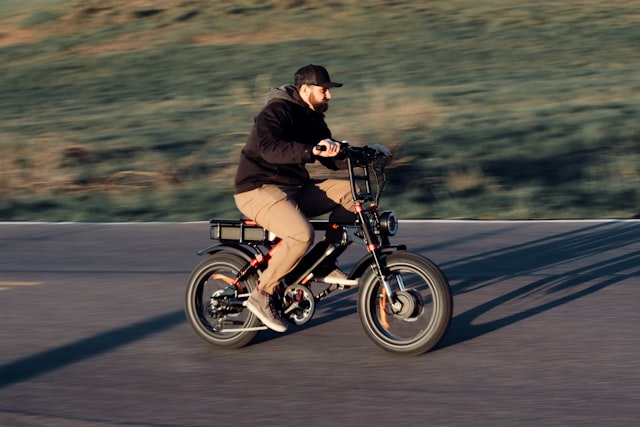
Long-tail and front-loader bikes built to carry kids, groceries and gear.
A cargo e-bike is the closest thing to a second car for a lot of families. Long-tail models stretch the rear of the frame to fit two child seats or a pair of big panniers; front-loader (bakfiets-style) bikes put a box between the rider and the front wheel so you can see passengers and cargo. Either way, the motor makes the extra weight disappear on the flats and manageable on bridges and overpasses, which is why cargo bikes have gone from a niche to a mainstream school-run and grocery tool.
Because these bikes routinely carry 300 to 450 pounds of rider plus load, every component has to be rated for it. Look at the total weight rating, not just the rack number, and check that the brakes are hydraulic with big rotors — stopping a loaded cargo bike on mechanical discs is a workout. Mid-drive motors with high torque are the gold standard for hills and heavy loads; a strong 750W hub motor is fine for flat Frisco and Plano streets and keeps the price down. Battery capacity matters because cargo bikes are heavy even empty; 600Wh is a practical floor, and dual-battery options are worth it for daily use.
The ecosystem around the bike is half the purchase. Child seats, running boards, rails, panniers, front racks and rain covers are often brand-specific, so pick a platform where the accessories you need exist and are in stock. Smaller 20 inch wheels lower the load and make the bike easier to handle at walking speed, which is when loaded cargo bikes are hardest to manage. A double kickstand is mandatory for loading kids safely. If your cargo bike has started to feel weaker, cut out under load or show a brake warning, an E-Bike Assessment can help sort out whether it is the battery, the controller or the brakes before you put passengers on it again.